This gallery contains 2 photos.

This gallery contains 2 photos.
Despite a forecast of heavy rains and flash floods in Fairfield County, many brave souls came out to the 2018 Easton Farm Tour. It was wet, but the rain was mild and the spirits were high!
We are thankful for the farmers who opened their doors (and greenhouses) to embrace the community.
Additionally, we thank the The Easton Garden Club, Historical Society of Easton, CT, the Master Composters, the Falcon Cheerleaders, and everyone who contributed to make this event a success.
Special thanks for the unique and fun prizes generously donated by:
Aspetuck Apple Barn J & L Orchids Old Bluebird Garage
Sherwood Farm Sport Hill Farm LLC Easton Village Store
Easton Community Center Shaggy Coos Farm Robert Danuszar
Gilbertie’s Herb Farm Sabia Tree Farm Silverman’s Farm
JCL Farm Gold Rush Farm
Photos by Katie Henry, Copyright of M3Media Productions


It was a successful day despite the weather.
A huge thank you to everyone who participated.
Stay tuned for the wrap up report…
Posted in Easton Government, Town meetings
 The South Park Avenue property is on the agenda for Easton Board of Selectman meeting tonight, June 21, at 7:30 at the Easton Town Hall Conference Room. At the beginning of the meeting at 7:30 is the public comment period. Preserving as protected open space the pastoral 29.6 acres was advocated by Citizens for Easton in 2016 for many reasons, including its sensitive location, abutting the section of the Mill River that is one of only nine Class A Wild Trout Streams left in the state. Many noted conservation organizations also supported its preservation. Please try to attend this meeting.
Posted in Uncategorized

With 50 mostly small- and family-run farms within its town limits, few Connecticut towns have preserved farmland as assiduously as Easton. And without sacrificing its status as an out-of-the-way oasis amid the sprawl of suburbia, Easton now wants to put itself on the map.
Of note, the town is now actively seeking a designation as Connecticut’s Christmas Tree Capital, with attendant signage on the Merritt Parkway. Recently, Citizens for Easton — a nonprofit group that works to preserve the town’s small town characteristics — invited residents, gardening enthusiasts, budding growers and other interested observers to an event called Meet Easton’s Farmers.
The well-attended meeting provided an overview of agriculture in Easton, the challenges faced by small farmers today and the town’s potential as an agri-tourism hub.
The town’s preservation measures helped retain large tracts of open space and largely rural ambiance. Silverman’s Farm evolved from a cider mill and truck farm founded in the early 1920s into a popular destination for day-trippers from throughout the tri-state region.
“In the 1980s a lot of farms — including us — became pick-your-own places,” said Irv Silverman, the youngest son of founders Ben and Rose Silverman,who now runs the family farm.“Little kids who visit have never seen fruit growing on a tree, so visits to farms like ours are educational for today’s youngsters.”
At the much newer Shaggy Coos Farm nearby, Tim and Bernadette Brady raise beef cattle, pigs, and turkeys, and board horses. Two years ago, the couple purchased two Holstein dairy cows and began producing natural milk.
“Natural milk tastes nothing like what you buy in a supermarket,” Brady noted. To demonstrate, he brought a container to give out samples of the farm’s chocolate milk. The Bradys spent days taste-testing and fine tuning the perfect combination of milk and cocoa.
The biggest hurdle the Bradys face is the lack of a USDA-certified slaughterhouse in Connecticut. This means producers such as the Bradys must bring livestock for slaughter to New York or Massachusetts.
Niche
Sal Gilbertie, owner of Gilbertie Herb Garden in Easton, urged those interested in agriculture to choose a product “niche.” His is a third-generation greenhouse that began as a producer of cut flowers, later diversified into potted plants and arrived at its current specialty — herbs — at a time when that market was in its infancy.
“We were the only game in town when it came to herbs,” said Gilbertie. More recently, Gilbertie has diversified yet again. This time, he is specializing in micro- , petite-, and baby-greens, capitalizing on their newfound popularity and reputation for packing a nutritional punch.
“The smaller the green, the more nutritious and flavorful it is,” said Gilbertie.
Howland Blackiston raises a rather unusual crop: bees. He has been a lifelong bee enthusiast but pursued beekeeping only after moving to Easton in the 1970s. He’s the author of both “Beekeeping for Dummies” and “Building Hives for Dummies,” and created a website in 1998 devoted to backyard beekeeping.
Bees play a vital role in the pollination of food crops and have suffered of late from a well-publicized syndrome known as colony collapse disorder (CCD). “We don’t know for sure what causes CCD but some very smart people are working on it,” Blackiston noted.
Possible culprits include viruses, parasites, mites and certain pesticides. “I urge everyone to take a very good look at what you put on your plants,” Blackiston said. In particular, he urged gardeners to eschew a type of widely available pesticide known as neonicotinoids. They are toxic to bees and are banned in some European countries.
The gathering also heard from Lori Cochran-Dougall, a board member of the Fairfield County Farm Bureau. Cochran-Dougall began a program that teaches women in veterans’ rehabilitation how to cook with the assistance of award-winning farm-to-table chefs. She pointed out that cooking skills help people to be both more self-sufficient and to eat healthier diets.
Some practical advice came from Carol Hamilton, a retired teacher who is a state-certified master gardener and member of the Easton Garden Club. In recent months, the club and Hamilton’s fellow master gardeners have fielded plenty of questions about the effects of winter and spring storms on plants and trees.
“Whenever you have a question, talk to a master gardener – it’s a free resource,” Hamilton noted. “Or better yet, take the course.”
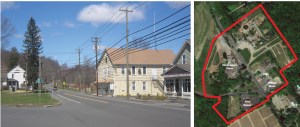
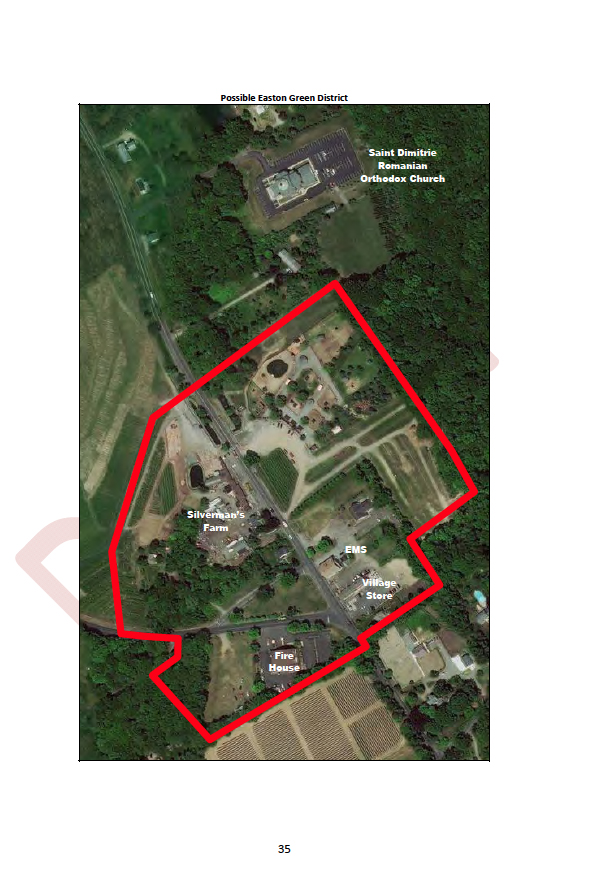
The country-like Sport Hill Road, Firehouse Green and Silverman’s Farm area is at risk.
The Planning and Zoning Commission has released the draft of the 2018-2028 Plan of Conservation and Development (POCD), which will guide the conservation and development of Easton for the next 10 years. It contains many proposals that you are urged to review (click here for draft POCD). At this Wednesday’s meeting, June 20, P&Z will discuss the plan and hear public input, so attending this meeting is very important.
Among the proposals is a “Village District” (under Section 8-2j of the CT General Statutes) in the Sport Hill Road, Firehouse Green and Silverman’s Farm area. Potential uses for this area could include small retail stores, specialty shops, restaurant, farm and garden centers, craft centers, business, professional offices, public services, post office, and residential. Click here for larger view of area currently proposed. There are many other important items in the POCD, so please take some time to review this critical document.
TAKE ACTION: If you cherish what makes Easton unique and a special oasis amidst the congestion of Fairfield County then let P&Z know that you want to keep the current zoning as is.
– Review the 2018 Plan of Conservation and Development draft on the town website or at citizensforeaston.org/town-planregs.
– Attend the important PZC Public Meeting on Wednesday, June 20, 7:00 p.m. at Helen Keller Middle School.
– Email your concerns to PZC: manania@eastonct.gov.
– Email CFE for updates and how to become more involved: cfe@citizensforeaston.org.
Posted in Uncategorized

(HARTFORD, CT) – Governor Dannel P. Malloy today signed an executive order directing the state’s Water Planning Council (WPC) to immediately implement the State Water Plan that was submitted to the Connecticut General Assembly in January 2018.
The plan, which was ordered by the General Assembly through Public Act 14-163, was developed by the WPC to balance the needs of public water supply, economic development, recreation, and ecological health. It was completed through an exhaustive and transparent process that included an extended period of public comment from all stakeholders. The plan required legislative review and approval, but the legislative session ended without action from the General Assembly.
A major point of contention for some legislators was a provision in the State Water Plan’s executive summary that declares water a public trust – a declaration of public policy that has been enshrined in state statute for more than 40 years. The Governor’s executive order recommits to the definition of water as a public trust.
“The State Water Plan is a critically important initiative that puts the needs of Connecticut families ahead of the commercial interests of private water utility companies and big businesses,” Governor Malloy said. “We should all be able to agree that water is a precious resource that should be protected for the public’s interest and safeguarded for future generations in the event of emergencies. Today’s executive order does just that, ensuring that we waste no time safeguarding our clean water supply.”
In addition to implementing the State Water Plan, the executive order takes the following actions:
“Connecticut’s water resources are among the purest and most well protected in the nation, and the State Water Plan ensures that this public trust resource will be wisely stewarded for future generations,” Department of Energy and Environmental Protection Commissioner Rob Klee said. “This plan, developed through a consensus-based stakeholder process, provides the data and guidance needed for our state to make informed choices in managing this precious resource.”
“The preservation, management and use of water is critical to Connecticut’s future,” Department of Public Health Commissioner Dr. Raul Pino said. “I thank the Governor for championing this important, multi-year plan that is designed to ensure a balanced use of this most precious natural resource, and we look forward to working with the administration, the legislature and the other members of the Water Planning Council to enact the State Water Plan.”
“Public Trust is a policy that recognizes the public’s inherent right to clean air, clean water, and a healthy environment,” Alicea Charamut of Connecticut River Conservancy said. “Here in Connecticut, we are fortunate to have this public trust policy solidified in statute – a statute that has been in place for 40 years. But those who profit from our water resources consider this policy a threat to their bottom line and seek to undermine its principal. They claim its inclusion in Connecticut’s State Water Plan as it currently resides will introduce uncertainty and confusion. To the contrary, honoring Connecticut’s public trust policy will ensure that we have clean and adequate water for public health, the environment, recreation and the economy for generations to come.”
The WPC is comprised of representatives four agencies: the Department of Energy and Environmental Protection, the Department of Public Health, the Office of Policy and Management and Public Utilities Regulatory Authority.
The State Water Plan is the first of its kind in Connecticut.
Posted in In The Press, Legislative
Do you cherish what makes Easton a special oasis amidst the bustle of Fairfield County? P&Z is considering a “Village District” in the proposed update of the Easton Plan of Conservation and Development (click here for more info) that could allow new commercial businesses in the Firehouse Green, Route 59 and Silverman’s Farm area such as small retail, specialty shops, restaurants, farm/garden centers, craft centers, businesses, professional offices, and public buildings.
P&Z will hold a public meeting on the draft on Wednesday, June 20, 7 p.m. at Helen Keller Middle School.
Existing retail establishments in town predate current zoning restrictions adopted in the 1940s when the town forefathers wisely enacted one- and three-acre residential zoning to control development and protect the watershed. With increasing stresses on the watershed and development pressures, it is more important than ever to retain our existing zoning.





 Citizens For Easton