Author Archives: Citizens for Easton

Image

Hartford wants to hear from you! There is still time to comment.

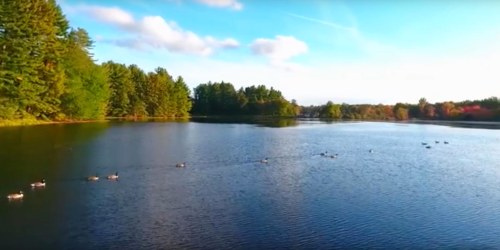
reservoirYou may have heard that conflict continues over an application before Planning & Zoning which would break zoning and imperil the watershed. We’re sorry to say, you’ve heard right. An earlier application had been rejected by P&Z, while Judge Berger of the Hartford District Superior Court had sided with concerns that intensive development on the watershed would present a deleterious impact on the public water supply. The developer subsequently appealed, and was denied.
As always, the challenge before P&Z remains so-called affordable housing under CGS 8-30g. However, in an effort to redress the concerns over this law – often used by developers to force towns to break their zoning – our State Senator, Tony Hwang and Rep. Brenda Kupchick are soliciting comments. Those could help shape potential amendments that would protect the watershed and public health. The deadline for input for the public hearing was February 16 but you still can send in your comments, so please contact your representatives listed below.
If this application were to prevail, others would follow. A domino effect thus established, the threat to public health would be far-reaching, and irreversible.
“Irreversible” is a big word. Fortunately, “if” is not. It’s not too late to make certain this deeply flawed law doesn’t subvert our future, our health, and our mandate to protect this precious resource.
Citizens for Easton has a basic position:
If any portion of a proposed affordable housing development is on land that drains into a public water supply reservoir, a substantial public interest must be established which supersedes 8-30g.
Intensive development on the watershed puts at risk the drinking water of over 340,000 residents in towns across Fairfield County, including Bridgeport, which depend on Easton’s reservoirs for safe, clean, potable water.
Please send your comments to : HSGtestimony@cga.ct.gov with subject line: “Improve 8-30g” with copies to Tony.Hwang@cga.ct.gov, Brenda.Kupchick@cga.ct.gov and adam.dunsby@housegop.ct.gov

Residents can weigh in on controversial 8-30g law

As reported by the Fairfield Sun on February 6, 2017
Housing Committee Co-Chair Sen. Tony Hwang and Ranking Member Rep. Brenda Kupchick today issued the following statement: Area residents can now tell state lawmakers what they think of the controversial affordable housing state law known as 8-30g. The CT General Statute section 8-30g law:

  • Has been used by developers to bypass local control and zoning regulations and environmental concerns
  • Has caused controversial housing decisions throughout Connecticut after costly and inflammatory court litigation.
  • Has the potential to forever alter the unique and historical character of neighborhood architecture and communities.

This year, we have an opportunity to:

  • Take a close look at this law and how it can be improved and adapted to meet changing community needs.
  • Receive input from local zoning officials, community leaders and residents from impacted neighborhoods.
  • Come to a solution which provides towns with much-needed control and flexibility while also achieving the goal of increasing our stock of workforce housing.

The Connecticut General Assembly’s Housing Committee will hold a public hearing on the 8-30g law on Thursday, Feb. 16 at the Legislative Office Building in Hartford. You can email your comments about the law today to the Housing Committee at HSGtestimony@cga.ct.gov. The comment may be as brief as you like. Include your name and town in the email.
Put “Improve 8-30g” in the email’s subject line
Copy us on the email at Tony.Hwang@cga.ct.gov and Brenda.Kupchick@cga.ct.gov
For more information on the law, visit cga.ct.gov/2017/rpt/pdf/2017-R-0013.pdf. For more information, call 800-842-1421 (Co-Chair Sen. Hwang) and 800-842-1423 (Ranking Member Rep. Kupchick).

Saddle Ridge: “Bad for everyone except for the developers”

Easton Courier: Letter to the Editor, February 1, 2017
I urge the Easton Planning & Zoning Commission to reject the proposed Saddle Ridge development for the following reasons:
First, much evidence has been presented as to the deleterious effect this proposal will have on the public water supply, and we must err on the side of caution since tens of thousands of people drink water from our reservoirs. One need look no further than Flint, Mi. to see the potential risk. Moreover, the Aquarion Water Company opposes this plan.
Second, approval would encourage future development on the watershed, further impairing the water quality.
Third, developers often use the affordable housing law, as they are here, to circumvent local zoning regulations. They do not use the law so people can obtain housing they might otherwise not be able to afford but instead use a well-intentioned law to create high-density housing to maximize profits. This was clearly not the purpose of the law.
Fourth, there is legal precedent to deny the application since the court has already ruled against Saddle Ridge’s prior filing.
Last, 2017 marks 76 years since many of Easton’s strict zoning regulations were enacted. These laws were passed to protect public water, and there is no compelling reason to change them. This application is bad for everyone except for the developers, and it should be rejected.
Jim Riling

Lack of need, expert objections call for denial of Saddle Ridge plan

Easton Courier: Letter to the Editory, January 24, 2017

To the Editor:
To legally reject an application for an affordable housing development such as Easton Crossing, the probable cause of harm to the health and safety of the populace has to outweigh the need for affordable housing in Easton.
Apparently there are 15 affordable housing units in Easton, which have had an approximate 50% vacancy rate for the last several years. If this is so, there doesn’t appear to be a demand for the existing affordable housing in Easton, much less a need for even more affordable housing.
Also, the fact that P&Z has received written objections to this development based on protecting the public water supply and aquifers from such credible organizations and authorities as the Aquarion Water Company, the Connecticut Fund For the Environment, the Easton Health Department, the Easton land use director, the Connecticut Metropolitan Council of Governments, and one of the region’s preeminent soil, biological and wetlands scientists, Michael S. Klein, certainly seems to prove that this development application does pose a considerable threat to the health and safety of the populace.
In summary, a demonstrable lack of demand for affordable housing combined with the distinguished and detailed opposition of the above-named organizations and experts would call for denial of this application by the Easton Planning & Zoning Commission.
Grant Monsarrat
Easton, CT

Attend the Saddle Ridge Development Hearing, Monday, December 12

Easton is more than a place to live — it’s home to our most precious commodity …WATER. We feel the development proposed by Saddle Ridge would be a danger to our drinking water. The next public hearing on the Saddle Ridge high-density development application is Monday, December 12, 2016, 7:30 pm at Helen Keller Middle School. The 124-acre site is on watershed land abutting Sport Hill, Silver Hill, Cedar Hill and Westport Roads. Please attend if you can.

Help preserve this idyllic landscape

The fields on the South Park Avenue property. Contact cfe@citizensforeaston to help preserve this landscape.

The fields on the South Park Avenue property.
Contact cfe@citizensforeaston to help preserve this landscape.

Connecticut Audubon Society supports preservation of South Park Avenue property

Following is text of the letter from the Executive Director of the Connecticut Audubon Society to the Easton Board of Selectmen:
The Connecticut Audubon Society joins with Citizens for Easton in its concern about the future of 29.6 acres on South Park Avenue adjacent to the Mill River. Development of this town-owned land will compromise a small but beautiful wildlife habitat that plays an important watershed protection role for the river, and is a much-used and enjoyed passive outdoor recreational area for birdwatchers, anglers, artists and school groups.
The Mill River is one of only nine Class A Wild Trout Streams left in Connecticut and is unique because it is pristine and cold enough to sustain wild trout despite being on the edge of a suburban area. Wild brook and brown trout are among 17 fish species listed as “most important” in the Connecticut Wildlife Action Plan.
Preserving the property would also be consistent with Easton’s Town Plan of Conservation and Development, which states as its “cardinal principle”: “The major policies and goals of the Town Plan in respect to resource conservation are: Protect the natural, scenic, historical and cultural resources of the town, especially its wetlands, streambelts and ground water resources, but also its steep slopes, ridgelines, major trees and significant wildlife areas …”
The Connecticut Audubon Society is the state’s original, independent Audubon. We and our many members in Easton look forward to your leadership as exemplary stewards of the environment by supporting the preservation the 29.6 acres on South Park Avenue as open space in perpetuity for current and future generations.
Sincerely,
Nelson North
Executive Director

Public health, watershed protection outweigh financial interests

Easton Courier on October 15, 2016

To the Editor:

Saddle Ridge has once again submitted an application for high-density housing on the public watershed. Once again, Citizens for Easton will oppose any proposal that seeks to overturn long-standing zoning regulations designed to protect a vital resource which Easton and Fairfield County rely upon.
Eight months ago, Judge Marshall K. Berger Jr. of the Hartford District Superior Court rejected an earlier Saddle Ridge high-density application which would have imperilled the long term health and maintenance of the watershed. Saddle Ridge was subsequently denied certification for appeal, upholding Judge Berger’s decision.
The new application — which seeks one unit per acre, in addition to duplexes on 18 lots — purports to conform to the so-called affordable housing statute. However, Judge Berger argued that the protection of the watershed, along with the manifest public health issues directly related to that protection, must assume precedence over such considerations.
In opposing the earlier high-density housing application, CFE had likewise argued that issues of public health and the protection of the watershed must supercede the short term financial interests of any developer. With the full understanding that Planning & Zoning must take into careful consideration any application that comes before it, we once again urge its members to summarily reject this most recent one as well.

Citizens for Easton Board

Image

easton-courier-10-05-2016

Easton’s other housing crisis: wildlife

Easton Courier: By Jane Paley, Special to The Easton Courier on October 5, 2016:

Humans aren’t alone; some of our wildlife species could be losing their habitats. This may give pause to those who moved to Easton for its rural character and commitment to preserving the town’s woods, wetlands, waters, and open spaces.

The Eastern box turtle, wood turtle and sharp-shinned hawk are three examples. Each lives along and in the Mill River in the vicinity of the South Park property where various development proposals are being considered by the Board of Selectmen/woman.

The National Wildlife Federation describes the Eastern box turtle as five to six inches long with a domed shell. The turtles come in various shades of brown, frequently with yellow markings. They have a curved mouth and eat “just about anything they can catch and fit in their mouths.”

In their current Mill River home, they can find cool shelter from the sun and a plentiful diet of insects, berries and roots.

According to the Connecticut Department of Energy and Environmental Protection, this turtle “gets its name from its ability to completely withdraw into its shell, closing itself in with a hinged plastron. Box turtles are the only Connecticut turtle with this ability.”

The DEEP fact sheet offers concerns about this species: “Because of the population decline in Connecticut, the box turtle was added to the state’s List of Endangered, Threatened, and Special Concern Species when it was revised in 1998. It is currently listed as a species of special concern.

“… Loss of habitat is probably the greatest threat to turtles. Some turtles may be killed directly by construction activities, but many more are lost when important habitat areas for shelter, feeding, hibernation, or nesting are destroyed.”

The wood turtle is five to nine inches in length and has an elaborate shell. Those found in New England often have orange markings. According to the DEEP fact sheet, their habitat is ”usually within 1,000 feet of a suitable stream or rivers, where they hibernate in the winter.” This species is also of special concern to DEEP.

“The wood turtle is imperiled throughout a large portion of its range and was placed under international regulatory trade protection through the Convention on International Trade in Endangered Species (CITES) in 1992. Wood turtles have also been included on the International Union for Conservation of Nature’s Red List as a vulnerable species in 1996. … They are protected by the Connecticut Endangered Species Act.”

The DEEP placed the sharp-shinned hawk on Connecticut’s Endangered Species list. “It is the smallest North American accipiter. … Many were lost as a result of pesticides in the 1970s. Although pesticides no longer play as large a role in the decline of sharp-shinned populations today, the species is still affected by other factors, like the loss of habitat.

“Collisions with plate glass doors and picture windows are responsible for the deaths of many sharp-shinned hawks annually. The glass reflects the surrounding woods and cannot be readily distinguished by a hawk chasing prey or seeking cover.”

Advice from DEEP is both implicit and explicit: Protect these vulnerable species.