Category Archives: Farmland preservation

SOUTH PARK PRESENTATION-SAVE THE DATE!

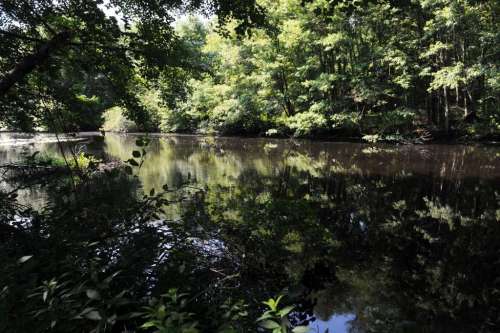
Forever Yours or Forever Gone: On Thursday, August 18, 2016 (location and time to be determined by Board of Selectmen) Citizens for Easton will present to the Selectmen a proposal to retain the unique 29.6 South Park Avenue property as open space in perpetuity. This pastoral landscape is part of Easton’s rural character and abuts the Mill River, one of only nine Class A Wild Trout streams left in Connecticut. Your presence will send a strong message to the Selectmen that townspeople feel very strongly about preserving this important part of Easton’s character and heritage for current and future generations.

Please also pass this information to others interested in preserving part of what makes Easton special and safeguarding the sensitive Mill River.

Email cfe@citizensforeaston.org to signup for important updates.

Thank you for your support!

Judge ends Easton battle over development proposed on watershed land-CT Post-July 17, 2017

post saddle ridge imageEASTON — The legal battle over the proposed Saddle Ridge development on 124.7 acres of watershed land along Sport Hill Road has officially ended.

For more than five years, town residents, officials and others argued a housing development was too intense a proposal for the privately owned parcel bordered by Sport Hill, Westport, Silver Hill and Cedar Hill roads.

The town’s Planning and Zoning Commission and Conservation Commission denied two separate plans — one for a 105-unit development and another for a 99-unit proposal — in 2011.

Developers Huntley “Bucky” Stone and Robert Carlson, on the other hand, contended that their plans, which would include affordable housing within the development, would not have a substantially different impact on the land than a plan approved in 2009 for 21 mansions. They appealed the commissions’ decisions in Superior Court.

Earlier this year, Hartford Superior Court Judge Marshall K. Berger ruled that the plans were not appropriate for the area. And recently, ending the debate once and for all, the Appellate Court decided not to take up the case, as requested by the developers.

Verne Gay, president of Citizens for Easton, a community group formed in the 1970s to help protect the town’s open space, said he’s not sure whether Stone, the face of the development, will now give up plans to develop the site or submit a new proposal.

“The courts rejected the appeal,” Gay said. “Does he have another move? I don’t know.”

For town residents, the legal battle was a long one that required constant attention and funds to pay a lawyer of their own. Citizens for Easton created the Coalition to Save Easton for this reason, which attained intervenor status in the case, meaning it was always aware of the latest actions in the case.

“It has been very hard,” Gay said. “We all have our own jobs and lives. Over the years, Bucky was well funded and he had a very good legal team. At any point through this process he could have prevailed. Our difficulty was to just keep fighting.”

“We’re very simply a local tree-hugger group here,” Gay added. “It has no other motivation. It’s just protecting the town.”

Stone and Carlson did not return calls for comment.

The town’s regulations limit development in the property’s zone to one dwelling unit per 2 acres of buildable area, excluding the wetlands. The developers sought a more dense housing complex of 99 units in 31 buildings, with 30 percent of the townhouses set aside as affordable.

Under state statute, if a town with less than 10 percent affordable housing rejects a developer’s application to build affordable housing, the burden of proof is on the town to show the plan would harm public health, safety or other matters.

Ira Bloom, of the law firm Berchem, Moses and Devlin P.C., served as legal counsel for the town commissions. “For Easton it was extremely important to protect the town’s resources and, in particular, the public water supply area,” he said

The complex would have sat within two watersheds: the Easton Lake Reservoir and the Aspetuck Reservoir. Both serve as the Aquarion Water Co.’s public drinking water supply reservoirs that serve more than 400,000 Fairfield County residents.

First Selectman Adam Dunsby said protecting the watershed land merits appropriate restrictions on developments.

Brian Roach, program manager of environmental protection for Aquarion, said the 99-unit complex proposed housing densities that were more than two times the maximum density shown to be appropriate to protect water quality within watersheds.

“While Aquarion acknowledges the need for affordable housing in Connecticut, it strongly believes that high-density residential developments should only be considered for locations that are not within public drinking water supply watersheds,” Roach said.

In his 56-page decision, Judge Berger noted that the state statute that addresses affordable housing, section 8-30g, was not meant to tie the hands of communities like Easton, who have a low percentage of affordable housing.

“Saddle Ridge’s application highlights Easton’s need for affordable housing,” the decision states. “The Legislature’s enactment of (Section) 8-30g to accomplish that goal was not intended to allow every development at the cost of damaging natural resources such as our wetlands and watercourses. Sometimes, a different type or less intensive use of the land is demanded.”

ktorres@hearstmediact.com; 203-330-6227


8th Annual Farm Tour Date Set

August 20, 2016-Save the date!

More info to follow!


Town and intervenor oppose Saddle Ridge’s appellate court petitions

Saddle Ridge Village. Easton Courier archives

Two town commissions and the Coalition to Save Easton have filed memos opposing Petitions for Certification to the appellate court by Saddle Ridge Development LLC, et al, to hear their case on appeal.

The memos cap a multi-year dispute over Saddle Ridge Development LLC’s proposal to build Saddle Ridge Village, a 99-unit townhouse development with affordable housing units on watershed land bordering Cedar Hill, Silver Hill, Sport Hill, and Westport roads.

The developer sued to overturn Easton’s land use commissions denials of the dense housing development, which was to be located on the 124.7-acre site, which drains into the Aspetuck and Easton reservoirs and provides drinking water to more than 400,000 Fairfield County residents.

The reservoirs are part of an interconnected system of reservoirs that serve Stratford, Bridgeport, Trumbull, Shelton, Monroe, Fairfield and Westport. During the summer months, they are also used to supplement water demands in New Canaan, Wilton, Ridgefield, Stamford and Greenwich.

A Petition for Certification is a request for the Appellate Court to hear the case on appeal. Appeals in land use cases are not automatic, according to attorney Ira Bloom of Berchem, Moses & Devlin of Westport, who represented the Planning and Zoning and Conservation commissions and filed the memos on their behalf.

Bloom sent the memos to the appellate court on March 2 and said that Attorney Jan Brooks, representing the Coalition to Save Easton, intervenor in the case, sent a memo opposing Saddle Ridge’s petitions the same day.

The legal wrangling follows Hartford Superior Court Judge Marshall K. Berger’s Jan. 25 decision to dismiss the appeals of Saddle Ridge Development LLC and Silver Sports LP against the Easton Planning and Zoning Commission and the Easton Conservation Commission.

Berger’s decision was based on the finding that the public drinking water watershed is an important public interest that merits strong protection.

The appellate court court may decide to hear one, two or none of neither of the cases and likely will will make a decision in one to four months.

“My experience is they can take a few months to make a decision,” Bloom said.

VICTORY FOR SAFE DRINKING WATER: HOUSING DEVELOPMENT PROPOSAL DENIED

On January 25, 2016, Hartford Superior Court Judge Marshall Berger dismissed the affordable housing and inland wetlands appeals by Saddle Ridge Developers, LLC, et al, following a multi-year dispute. The developers had sued to overturn the town of Easton’s land use commissions denials of a proposed 99-unit townhouse development, which was to be located in watershed land that drains into the Aspetuck and Easton Reservoirs and provides drinking water to over 400,000 Fairfield County residents.


Watershed issues were paramount in reaching the decision to dismiss the appeals, according to Judge Berger’s memorandum of decision. “The preservation and protection of the wetlands and watercourses from random, unnecessary, undesirable and unregulated uses, disturbance or destruction is in the public interest and is essential to the health, welfare and safety of the citizens of the state,” the document reads.


Critics of the development project were elated at the court’s decision. “The Saddle Ridge proposal would set a terrible precedent for building on watershed land,” said Verne Gay, President of Citizens for Easton (CFE) and a member of the Coalition to Save Easton, (CSE) a sub-group of CFE that was the environmental intervener in the case.” Gay added, “I’m so grateful to Judge Berger for being so thorough and fair.”


In accordance with the Connecticut State Legislature’s directions to protect the town’s watersheds, the town’s land use commissions “properly reviewed the impact of Saddle Ridge’s proposal and denied the applications,” the memorandum reads. “The commission has proven that it’s decision was necessary to protect the public’s interest in safe drinking water that the risk to the drinking water supply for 400,000 people clearly outweighed the need for affordable housing units as proposed by Saddle Ridge.” Saddle Ridge Developers, LLC had planned to build 30 units to meet the criteria of State Statute 8-30g. CFE/CSE also notes that the existing affordable units on record with the town of Easton have historically had a vacancy rate of approximately 50%.

Watershed protection paramount in Saddle Ridge decision

Developer evaluating judge’s decision and options

Saddle Ridge Village. Easton Courier archives

Town officials have reacted positively to the Jan. 25 court decision to dismiss the appeals of Saddle Ridge Development LLC and Silver Sports LP against the Easton Planning and Zoning Commission and the Easton Conservation Commission.

The decision capped years of dissension over a proposal to build Saddle Ridge Village, a nearly 100-unit development with affordable housing units on a 124.7-acre site on watershed land bordering Cedar Hill, Silver Hill, Sport Hill, and Westport roads.

But the court decision may not mark the end of the proceedings.

The developer has 20 days to request the appellate court to hear the case on appeal, attorney Ira Bloom of Berchem, Moses & Devlin of Westport said. Bloom represented the Planning and Zoning and Conservation commissions.

And Huntley “Bucky” Stone, who owns Saddle Ridge Development LLC and Silver Sports LP along with partner Robert Carlson, appears to be continuing his fight to win his case.

“We recognize that this process is a marathon, not a sprint,” Stone said on Jan. 26. “We’re nowhere near ‘hitting the wall.’”

Hunt said the court decision “was no surprise. It was my prediction. It’s the safe way of going.”

Critics of the development project were jubilant over the court decision.

“Everybody’s thrilled,” said Verne Gay, president of Citizens for Easton and a member of the Coalition to Save Easton, a sub-group of CFE that was an environmental intervener in the case. “It was the best possible news and outcome.”

The group made the effort to stop Saddle Ridge because building the development “would set a terrible precedent for building on watershed land,” Gay said, and would run contrary to the town’s agrarian character.

“It was a bad idea,” he said. “I’m so grateful to Judge Berger for being so thorough and fair.”

In fact, watershed issues were paramount in reaching the decision to dismiss the appeals, according to the memorandum of decision.

“The preservation and protection of the wetlands and watercourses from random, unnecessary, undesirable and unregulated uses, disturbance or destruction is in the public interest and is essential to the health, welfare and safety of the citizens of the state,” the document reads.

In accordance with the state legislature’s directions to protect the town’s watersheds, the town’s land use commissions “properly reviewed the impact of Saddle Ridge’s proposal and denied the applications,” the memorandum reads.

First Selectman Adam Dunsby said the court “made a well-reasoned decision affirming the Easton Planning and Zoning Commission and the Easton Conservation Commission’s determination that the public drinking water watershed is an important public interest that merits the strongest protection.”

Bloom said he was “very pleased” about the court decision.

“I thought the decision was very thorough and complete and cited much of the evidence that the commissions relied upon in making their decisions,” Bloom said. “Both commissions should be commended for their extensive work on these cases. They did a very good job.”

The judge consolidated the developer’s two appeals — to the Conservation Commission on wetlands issues and to P&Z on the affordable housing piece — this past September, Bloom said.

A Sept. 8 court hearing followed fruitless settlement talks and rejection by the P&Z Commission in January 2015 of Easton Crossing, the developers’ alternative proposal.

The density of the Saddle Ridge proposal exceeded what was recommended by the state for development in a watershed — one unit per two buildable acres

— according to Bloom’s brief for the P&Z at the hearing.

Attorney Matthew Ranelli of Shipman & Goodwin of Hartford represents the developers.

Ranelli said the Easton Crossing 48-unit housing development with affordable accessory apartments was an attempt to find a solution with the P&Z, but resolution wasn’t reached.

Ranelli said he couldn’t comment at length about the Jan. 25 court decision because his general policy is not to comment when cases are still pending.

“We’re evaluating the decision and our options,” he said.

Stone said he and Carlson are “digesting” the 57-page memorandum of decision.

“We take it very seriously,” he said

Partnership would preserve Gilbertie property Land and greenhouses would be protected for open space and farming

Dan Levinson, president of Main Street Resources, and Sal Gilbertie shake hands to seal their business deal.

A third-generation farmer, Sal Gilbertie gets up every morning and goes to work all day in his four acres of greenhouses on Adams Road. He grows petite edibles, cut greens and other USDA-certified organic products to sell to leading food markets in the tri-state area.

He and his family own and operate Gilbertie’s Herbs and Garden Center in Westport, begun by his grandfather, in addition to farming the wholesale operation in Easton.

Farming is what Gilbertie loves, and at 79, he shows no signs of slowing down or wanting to do anything else.

“I hope I can keep doing it all my life,” he said at the end of a busy workday.

But farming has challenges beyond dawn-to-dusk hard work and the whims of Mother Nature.

Three years ago, financial reality forced him to sell the 34-acre property on Adams and Keller roads that he and his wife, Marie, purchased in 1984. Dan Levinson, president of Main Street Resources, a limited liability company in Westport, bought it. Gilbertie continues to operate his business through a lease with Levinson.

Levinson and David Brant, executive director of the Aspetuck Land Trust, want to create a conservation easement that would preserve 15.4 acres of the property as open space and have approached the town of Easton about forming a partnership.

The site abuts Randall’s Farm Preserve, the 34-acre former farm that Joan DuPont donated to the land trust three years ago.

Brant and Ross Ogden, a Planning and Zoning Commission alternate, presented a broad overview of the proposed partnership to the Board of Selectmen, subject to negotiations and taxpayer approval.

The other half of the property, with its working greenhouses and buildings, plus the house, which sits on three acres, would continue to be a farm.

Brant said the proposed venture would be “a nice extension” to the 34 acres Joan Dupont donated, and that the land trust “would work very hard to come to some kind of a deal.”

“We love Easton, which has a great agricultural heritage and ongoing agricultural enterprises,” Brant said. “Preventing Gilbertie’s farm from being developed is a good thing. It’s fortunate that Dan has the means and inclination to preserve it as an agricultural enterprise.”

Sport Hill Farm also grows vegetables on the site, Brant said.

With regard to the 14 acres that would be preserved as open space, Brant said the land trust would undertake fund raising to come up with the money to purchase it, if the town is able to be a partner.

“We’d like to see Gilbertie’s Farm preserved, and we’re going to try to make it happen,” First Selectman Adam Dunsby said.

The town has a fund for fees in lieu of open space that can be used only for open space purchases. People who come before the Planning and Zoning Commission for subdivision approvals have the choice of donating 15% of the land they are developing or the cash equivalent. Over the years the fund has accrued $806,916.

Two other funds might be able to be tapped for money for this purpose, the agriculture land preservation fund, which has $66,595 and the land acquisition fund, which has $8,752.

“So the town is in the rare position of actually having money that could be used for this purpose as I understand it,” Dunsby said. “If the town participated, there would be no tax impact. We would be drawing on existing funds.”

Since the partnership involves a purchase, it would require a referral to the Planning and Zoning Commission, meetings with the Board of Finance and a Town Meeting. Nothing is set in stone since the idea is in the conceptual stage, subject to negotiations, but the parties are anxious to move it forward.

“We purchased the property from Sal three years ago to protect it and are hoping to work with the land trust, the town and Sal to put a transaction together that protects the farm long-term for the community,” Levinson said. “We would love to keep it as an operating farm and protect it from rising prices and fear of future development.”

Levinson said Easton is one of the few parts of the world that has a shot at preserving small, working farms, “preserving something really beautiful.”

“We believe that the local food system is really critical in New England, and places like Gilbertie’s can play a critical role in bringing local farming back to life,” Levinson said.

He is cofounder to the Green Village Initiative, a nonprofit in Bridgeport, whose mission is to create social, economic and environmental change through a network of ,  and . The initiative promotes and educates the community about nutrition, healthy eating, agriculture, and gardening in an urban setting.

“We have a strong interest to get something done in the town’s and land trust’s interest, as we set out to protect the farm,” Levinson said.

Gilbertie said he just had his best quarter selling petite edibles and is excited about the prospect of working with Brant and Levinson, whom he considers friends, and the town to preserve the farming legacy in Easton.

A renowned expert on herbs and vegetables,Gilbertie has written half a dozen books, available on Amazon.com, and appeared on the Martha Stewart Show.

Stewart had this to say about Gilbertie’s fifth book, Small-Plot, High-Yield Gardening: “Whether you have a real garden or just a window box, I can think of no better guide to creating a sustainable herb and vegetable garden than Sal Gilbertie,” she said. “For more than 30 years I have turned to Sal for healthy, productive plants. With this useful and informative book, he can help you, too, cultivate your garden.”

Easton, Conn.: Embracing a Farming Culture-From the NY Times

cfe-new-york-times-symbolEaston, Conn.: Embracing a Farming Culture

NOV. 11, 2015

By LISA PREVOST

Patti and Allan Popp didn’t move to the rural town of Easton, Conn., to take up farming. They were simply searching for more privacy than they had at their previous home in Stratford. Ms. Popp happened to fall in love with a 1740 house in foreclosure along one of Easton’s main routes, Sport Hill Road.

But within a few years of arriving in town in 1997, Ms. Popp, who worked as an office manager for a doctor, and her husband, a landscaper, decided to take a gamble. Ms. Popp’s employer was retiring, and she was ready for something new. So, like many Eastonites before them, the Popps would try to earn a living from the land.

Living In

The learning curve, Ms. Popp said, was enormous, and in the early years, when trial and error slowly revealed what their soil was and was not suited for, Mr. Popp’s landscaping business kept them financially afloat. Several times, they came close to giving up. But today, 15 years after they first began clearing their land, their business, Sport Hill Farm, can be counted among Easton’s small but established ranks of successful farms, with three acres of its own and 35 acres leased elsewhere.
The community has “welcomed us here,” Ms. Popp said, “even though we are one of the newer farms.”

A town of roughly 7,500, Easton is a rarity among Fairfield County suburbs in that it is home to at least 20 farms of varying sizes, from part-time specialty operations to large-scale agritourism attractions. The town is still predominantly woodland, largely because the four reservoirs within its borders put much of the land out of bounds for development — the Aquarion Water Company is a major landowner and the largest taxpayer by far.

With so much of the town in the watershed, “there isn’t a tremendous amount of land for big agriculture,” said Irv Silverman, who owns the 50-acre Silverman’s Farm, which draws many thousands of visitors every year to its pick-your-own orchards, berry fields and petting zoo. “There are only five or six farms here that are substantial enough to have at least 30 or 40 acres. But a lot of other little farms have come into existence.”

Easton’s peaceful, rural feel was the primary draw for Angenette and Bill Lynch, who moved from Stamford with their two children last year. Ms. Lynch grew up in a small town in upstate New York, and Easton felt familiar.

When a four-bedroom house went on the market right next door to one of Mr. Lynch’s cousins, the couple jumped, paying slightly more than the asking price, to get it. Mr. Lynch’s commute into New York City, where he is chief operations officer for the Specialty Food Association, is longer, “but this location checks all his boxes in terms of where he wants to be living,” Ms. Lynch said. And they are happier with the public school system in Easton; in Stamford, they paid for parochial school.

Easton’s small-town atmosphere is reinforced by avid conservationism and strict zoning. Commercial development consists of not much more than a couple of convenience stores and a single sit-down restaurant, the Olde Blue Bird Inn, serving breakfast and lunch. The Blue Bird is popular for weekend brunch, but you have to bring your own vodka for your Bloody Mary — no place in Easton sells alcohol.

What You’ll Find

Although Easton covers 27 square miles, it has only around 2,500 households, which makes it far less dense than the rest of the county — 274 people per square mile, versus the county average of 1,468, according to state calculations. Easton is not on the Metro-North rail line, so New York City commuters typically drive to the station in downtown Fairfield.

Many residents work at the headquarters of General Electric, which sits just outside Easton’s border in Fairfield. The company’s announcement earlier this year that it is considering relocating outside Connecticut is a source of concern, although the effect of a move on the local housing market would depend on where G.E. relocated and whether the company moved some or all of its offices, said Gayle Worthington, an agent with William Raveis Real Estate who lives in Easton.

Lower Easton — defined as the section below the blinking yellow light in the town center at Beers and Sport Hill Roads, according to Ms. Worthington — has mostly one-acre zoning. Upper Easton has three-acre-minimum zoning.

There are no condominiums or apartment complexes. A controversial proposal by the Saddle Ridge development company for 99 housing units, a portion of them affordable, on about 124 acres in the three-acre zone is on appeal in state Superior Court, having been turned down by the town’s planning and zoning commission, said Adam Dunsby, the first selectman, who acts as the town’s chief executive.

What You’ll Pay

The roughly 120 homes on the market earlier this month were priced from $450,000 to $2.9 million. The bulk of the properties fell between $600,000 and $1 million.

The number of sales was down about 12 percent this year as of the end of September compared with a year earlier, according to Ms. Worthington. The median sales price of $595,000 is up slightly over last year, but is still 22 percent below the market high in 2006, she said.

Properties in Lower Easton tend to sell more quickly because of their proximity to Fairfield and the Merritt Parkway, said Kelly Higgins, an agent with Coldwell Banker. But over all, buyers who choose Easton are usually seeking more house for their money, relative to towns on the rail line, and a small-town lifestyle, she said.

Sixteen new houses are planned at Easton Woods, a 44-home subdivision developed in phases beginning in the late 1980s, according to Jeff Wright, the listing agent and the owner-broker of Re/Max Right Choice in Trumbull. Twelve lots of three acres and up are still available. The homes start at 4,000 square feet; prices range from $1.3 million to $2 million, Mr. Wright said.

What to Do

Easton has a senior center, a public library and a community center, which has a rock-climbing wall and a fitness center.

The 730-acre Trout Brook Valley Preserve, which extends into Weston, welcomes hikers, dogs and horseback riders to its trail system.

The Easton Parks and Recreation department runs a variety of after-school activities for children, as well as an extended-day program with drop-offs as early as 7 a.m. and pickups as late as 6 p.m.

The members-only Easton Racquet Club has tennis courts and a swimming pool.

The outdoor patio at the Easton Village Store, which offers a variety of takeout sandwiches, soups and prepared dishes, is a popular meeting place.

The Schools

Samuel Staples Elementary School, built in 2005 with a distinctive barnlike design, serves about 600 students in kindergarten through Grade 5, as well as about 30 preschoolers.

Helen Keller Middle School, for Grades 6 through 8, features a high-tech innovation lab, said Thomas H. McMorran, the schools superintendent.

Joel Barlow High School, which is in a separate school district shared with the town of Redding, serves just over 1,000 students and has a 98 percent graduation rate, Mr. McMorran said. SAT scores for the class of 2015 were 561 for reading, 567 for math and 561 for writing; state averages were 504, 506, and 504.

The Commute

The drive to the station in downtown Fairfield takes 15 to 25 minutes. Travel time to Grand Central during peak hours runs from around 70 to 90 minutes. A monthly rail pass is $354.76 purchased online.

The History

Mills once drove the Easton economy, but little evidence of that past remains. According to a history linked to the town website, in the late 19th century, the Bridgeport Hydraulic Company began buying up land in Easton in order to secure water for that nearby city, where thriving factories were drawing people by the thousands. The waterside mill sites were chief among those acquisitions, and the buildings were demolished along the way.

2015 FARM TOUR

Redding man wins basket full of treats
By Jane Paley, Contributor on August 25, 2015 in Business, Connecticut News, Lead News, News • 0 Comments

To celebrate the seventh annual farm tour, Citizens for Easton raffled a big red basket packed with produce and goodies from local farms, businesses and artists.
Drum roll please! From nearly 100 participants in the first annual Citizens for Easton Farm Tour “Big Red Basket” raffle, the winner is Chris O’Rielly of Redding.
His winnings include donations of goodies from Silverman’s Country Market, the Easton Village Store, Blue Button Farm, Sport Hill Farm, Sherwood Farm and the Aspetuck Valley Apple Barn.
Fair Hill Farm donated one full week of horseback riding camp. Art photographer Jeff Becker contributed a framed photo and Sal Gilbertie donated three gardening books. Fitness trainer Bob Danuzer will give the winner an in-home training session.
Margot Abrams of Floral Designs by Margot contributed a succulent garden arrangement. The winner will be able to get some free gas courtesy of the Old Blue Bird Garage. Greiser’s provided this year’s big red basket.
By every measure, this year’s Farm Tour was a big success. The weather was beautiful and the chance to sample Easton’s bounty drew crowds of happy visitors from near and far.

2015 CFE Annual Newsletter

2015 CFE Annual Newsletter

Please join us for our annual meeting on Monday, June 22 at 7:00 PM in the Easton Public Library.

Featured speaker: Douglas Thompson, Author of The Quest for the Golden Trout