Category Archives: Preserving Easton

Mill River Park proposed for South Park

Nancy Doniger on August 25, 2016

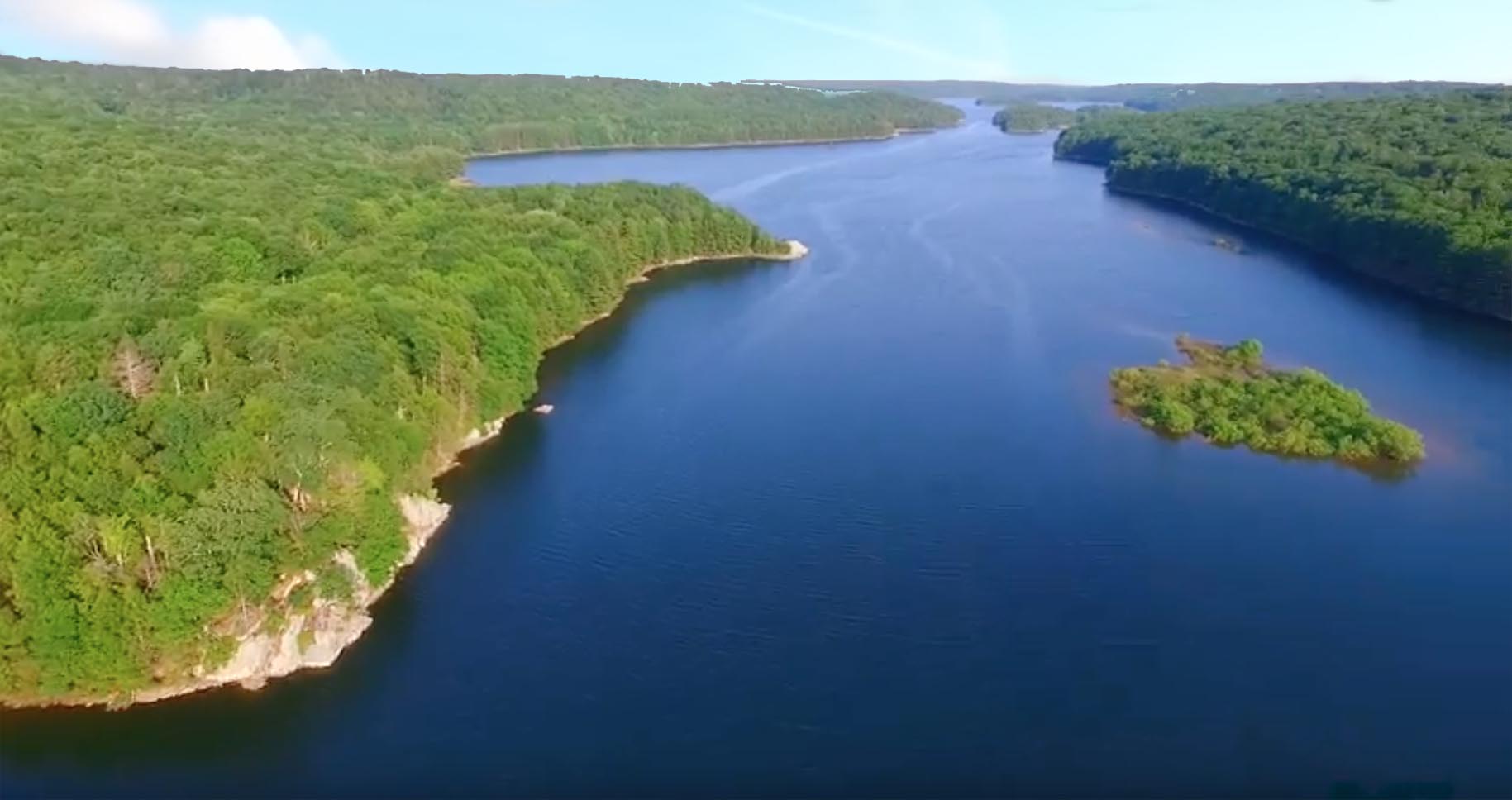
Citizens for Easton wants to preserve the South Park Avenue tract as a park, which they have named the Mill River Park. — Bryan Haeffele photo

Mill River Park … forever yours or forever gone. That is the title of Citizens for Easton’s proposal to retain the 29.6 acres of town-owned property at 22 South Park Avenue as open space in perpetuity by making it a town park.

Passive recreation at Mill River Park would bring enjoyment that’s appealing to all, according to the proposal. Activities would include catch-and-release fishing, en plein air painting, picnicking, walks, photography, school study groups and bird watching.

Former first Selectman William J. Kupinse Jr. presented the Mill River Park proposal in a slideshow to the Board of Selectmen and residents who packed the community room at the Easton Public Library. — Bryan Haeffele photo

Former first Selectman William J. Kupinse Jr. presented the proposal in a slideshow to the Board of Selectmen and residents who packed the community room at the Easton Public Library, filling every seat and spilling over into standing room in the back.

“Citizens for Easton was founded back in the 70s, and the reason it was founded was to prevent development on this very piece of property,” Kupinse said.

He provided a brief overview of the group’s successful preservation projects over the years and invited anyone who is interested to “join up with us.”

“We are not as some people have suggested a bunch of trouble makers,” he said. “We have tried instead to preserve the Easton we know and love.”

Roughly 67 people, from 20-somethings to senior citizens, turned out for the Aug. 18 meeting to hear Citizens for Easton’s ideas, the latest in a growing list of proposals for the site the selectmen have heard over the past two years.

The town owes $4.6 million for the South Park tract, which it purchased in 2008 from Running Brook Farm. At the time, the site was the subject of a 72-unit high-density affordable housing application scheduled for trial in Superior Court in Litchfield.

Voters agreed at a June 17, 2008, referendum to appropriate $6.15 million “… for preservation, conservation and land use control purposes … ,“ according to the ballot, which is posted on the town website, Eastonct.gov, under South Park Information, along with related documents.

“This was not a proposal to buy the to buy the land for open space,” according to the minutes of a special town meeting June 9, 2008, that preceded the referendum.

“Although the town would purchase the land, it would simultaneously sell a two-year lease/purchase option to the New England Prayer Center for $300,000. This amount would cover the town’s cost during the option period. If the lease/purchase option was not exercised, the town could sell 14 1-acre lots to cover the cost of the purchase and retain the remainder of the land as open space,” the minutes state.

The town lease-and-purchase-option agreement with the nonprofit New England Prayer Center permitted six-month extensions if the town’s approval of the prayer center’s building plan was appealed by a third party, which it was.

The prayer center lost its final option to purchase the property after six years and multiple lawsuits. It has submitted a new proposal, which the selectmen are considering along with the others.

Resident Amy Zima said she and her family chose to live in Easton over neighboring towns because of its open space and pastoral qualities. — Bryan Haeffele photo

A park for southern Easton

Easton is a jewel in Fairfield County that is not replicated anywhere else, Kupinse said.

“It is an amazing town,” he said. “If you want development, there are plenty of towns for you to go to.”

Citizens for Easton has proposed the Mill River Park for South Park, not for themselves but for future generations, he said.

“Some of us are getting older and will perhaps be going somewhere else when we go from here, and it’s not to another town,” he said, generating laughs. “We have a generation coming up that really needs what we have here in Easton, and I would urge everyone to support this.”

He said he could speak about what’s wrong with the other proposals, but instead was taking a positive approach in recommending Mill River Park for the site. He said it makes sense for financial reasons to have a park in southern Easton. It also makes sense from a planning and zoning standpoint, and Citizens for Easton supports what the P&Z has done over these many years; it further makes sense for protection of natural resources, he said.

Easton has a lot of open space, much of it is not conducive to walking on it, and most of it is in the northern part of the town, he said.

“Mill River Park would be an ideal neighborhood park for southern Easton, and it is more accessible than the open space in the northern part of town,” Kupinse said.

The South Park Avenue tract is an iconic gateway to Easton, just off the Merritt Parkway, and one of the main routes into Easton.

“Mill River Park makes sense for financial reasons,” Kupinse said. “Many communities feel they have to develop their land. Actually studies show it’s less expensive if you have open space or anything without buildings on it. Once you start putting buildings on it, it costs more to supply all the benefits homeowners want than the town would get in taxes.”

South Park costs the town less than 1% of its $43 million budget, he said. “If we sell it taxes aren’t going  to go down. It makes good sense that if it’s less than 1% we’re keeping it.”

Right now the property is costing taxpayers $160 a year. If the town bonds the property, it will drop to $120 a year per household. After 20 years the debt would be repaid, and Easton would own the property, he said.

“It’s cheaper to have non-developed property than to develop it and spend taxes on it,” he said. “Controlling the property saves money.”

In the past the town has had some fights over development, and it costs money to defend it. If South Park has a new owner, the owner can promise anything, but that doesn’t mean they’re not going to try to do something else in the future, he said.

“If we own it, we don’t have to defend it,” he said.

If the town sells it to a non profit, it can get payment in lieu of taxes (PILOT) for it, but based on the condition of the state there is no guarantee the PILOT funds will continue to provide a positive cash flow. If the town sells it to a for-profit entity, it will have to supply services in return for the taxes it will receive, he said.

P&Z supplied a report on putting senior housing on the site at the request of the selectmen, but “I suppose there’s no harm in looking at things, but I hope people realize it’s not the vision for the property that we should have,” he said.

Mill River Park makes sense from planning point of view because the town can keep the property in conformity with the vision P&Z has for Easton.

If the town has a referendum as the selectmen have suggested, he urges them not to have two choices such as athletics and senior housing. He said they should have open space as one of the choices.

“We have nature’s classroom in our backyard, and we should keep it,” Kupinse said. “Once we sell it, it’s gone.”

Addressing the Board of Selectmen, James Prosek said he supports Citizens for Easton's proposal. He and Laura Modlin created the Mill River Heritage Project, an educational website to educate the public about the Mill River. — Bryan Haeffele photo

Residents at the meeting overwhelmingly favored preservation of the site for open space and urged town officials not to sell it. Many of them delivered impassioned prepared statements to applause and in some cases, a standing ovation. Others gave spontaneous remarks.

Comments from residents and the Board of Selectmen are in a separate article in the Aug. 25 Easton Courier. Watch for our video coming soon at EastonCourier.com

CFE PRESENTATION ON 22 SOUTH PARK AVENUE

mill river from david

View of the Mill River on the 29.6 acre South Park property in Easton. This section of the Mill River is designated by the state of Connecticut as a Class 1 Wild Trout Management Area, one of only nine in the state.

Please join us at 7:30, Thursday, August 18, 2016 at the Library Community Room where CFE will present to the BOS a proposal to retain the 29.6 acres of property located at 22 South Park Avenue as open space in perpetuity.


Your presence at the presentation will send a strong message to the selectmen that the majority of the townspeople feel very strongly about preserving this unique piece of Easton’s character and heritage for current and future generations.


Please pass this email to anyone you know who is interested in preserving Easton’s future and character.


Also,  sign up to receive important information as we post it to our website. Simply, mouse over the bottom right corner, click the “follow” tab and enter your email address.


Thank you for your support!

Citizens for Easton


SOUTH PARK PRESENTATION-SAVE THE DATE!

Forever Yours or Forever Gone: On Thursday, August 18, 2016 (location and time to be determined by Board of Selectmen) Citizens for Easton will present to the Selectmen a proposal to retain the unique 29.6 South Park Avenue property as open space in perpetuity. This pastoral landscape is part of Easton’s rural character and abuts the Mill River, one of only nine Class A Wild Trout streams left in Connecticut. Your presence will send a strong message to the Selectmen that townspeople feel very strongly about preserving this important part of Easton’s character and heritage for current and future generations.

Please also pass this information to others interested in preserving part of what makes Easton special and safeguarding the sensitive Mill River.

Email cfe@citizensforeaston.org to signup for important updates.

Thank you for your support!

Judge ends Easton battle over development proposed on watershed land-CT Post-July 17, 2017

post saddle ridge imageEASTON — The legal battle over the proposed Saddle Ridge development on 124.7 acres of watershed land along Sport Hill Road has officially ended.


For more than five years, town residents, officials and others argued a housing development was too intense a proposal for the privately owned parcel bordered by Sport Hill, Westport, Silver Hill and Cedar Hill roads.

The town’s Planning and Zoning Commission and Conservation Commission denied two separate plans — one for a 105-unit development and another for a 99-unit proposal — in 2011.

Developers Huntley “Bucky” Stone and Robert Carlson, on the other hand, contended that their plans, which would include affordable housing within the development, would not have a substantially different impact on the land than a plan approved in 2009 for 21 mansions. They appealed the commissions’ decisions in Superior Court.

Earlier this year, Hartford Superior Court Judge Marshall K. Berger ruled that the plans were not appropriate for the area. And recently, ending the debate once and for all, the Appellate Court decided not to take up the case, as requested by the developers.

Verne Gay, president of Citizens for Easton, a community group formed in the 1970s to help protect the town’s open space, said he’s not sure whether Stone, the face of the development, will now give up plans to develop the site or submit a new proposal.

“The courts rejected the appeal,” Gay said. “Does he have another move? I don’t know.”

For town residents, the legal battle was a long one that required constant attention and funds to pay a lawyer of their own. Citizens for Easton created the Coalition to Save Easton for this reason, which attained intervenor status in the case, meaning it was always aware of the latest actions in the case.

“It has been very hard,” Gay said. “We all have our own jobs and lives. Over the years, Bucky was well funded and he had a very good legal team. At any point through this process he could have prevailed. Our difficulty was to just keep fighting.”

“We’re very simply a local tree-hugger group here,” Gay added. “It has no other motivation. It’s just protecting the town.”

Stone and Carlson did not return calls for comment.

The town’s regulations limit development in the property’s zone to one dwelling unit per 2 acres of buildable area, excluding the wetlands. The developers sought a more dense housing complex of 99 units in 31 buildings, with 30 percent of the townhouses set aside as affordable.

Under state statute, if a town with less than 10 percent affordable housing rejects a developer’s application to build affordable housing, the burden of proof is on the town to show the plan would harm public health, safety or other matters.

Ira Bloom, of the law firm Berchem, Moses and Devlin P.C., served as legal counsel for the town commissions. “For Easton it was extremely important to protect the town’s resources and, in particular, the public water supply area,” he said

The complex would have sat within two watersheds: the Easton Lake Reservoir and the Aspetuck Reservoir. Both serve as the Aquarion Water Co.’s public drinking water supply reservoirs that serve more than 400,000 Fairfield County residents.

First Selectman Adam Dunsby said protecting the watershed land merits appropriate restrictions on developments.

Brian Roach, program manager of environmental protection for Aquarion, said the 99-unit complex proposed housing densities that were more than two times the maximum density shown to be appropriate to protect water quality within watersheds.

“While Aquarion acknowledges the need for affordable housing in Connecticut, it strongly believes that high-density residential developments should only be considered for locations that are not within public drinking water supply watersheds,” Roach said.

In his 56-page decision, Judge Berger noted that the state statute that addresses affordable housing, section 8-30g, was not meant to tie the hands of communities like Easton, who have a low percentage of affordable housing.

“Saddle Ridge’s application highlights Easton’s need for affordable housing,” the decision states. “The Legislature’s enactment of (Section) 8-30g to accomplish that goal was not intended to allow every development at the cost of damaging natural resources such as our wetlands and watercourses. Sometimes, a different type or less intensive use of the land is demanded.”

ktorres@hearstmediact.com; 203-330-6227


SADDLE RIDGE THREAT FINALLY OVER!

Appellate Court rejects Saddle Ridge petitions

Long case over dense housing has ended

Saddle Ridge Village. Easton Courier archives

The  appellate court has denied both petitions for certification in the case of Saddle Ridge v. Easton Planning and Zoning Commission and Saddle Ridge v. Conservation Commission.

This means the years-long battle against the proposal to build Saddle Ridge Village, a nearly 100-unit development with affordable housing units on a 124.7-acre site on watershed land, apparently is now over.

Huntley “Bucky” Stone, who owns Saddle Ridge Development LLC and Silver Sports LP along with partner Robert Carlson, proposed the project on a parcel bordering Cedar Hill, Silver Hill, Sport Hill, and Westport roads.

The case involved multiple court decisions and appeals following the P&Z and Conservations Commission’s rejection of several proposals and an alternative proposal by the developers.

A major point of contention was that the density of the Saddle Ridge proposals exceeded what was recommended by the state for development in a watershed.

“It’s been a very long process,” said Attorney Ira Bloom of Berchem, Moses & Devlin of Westport, who represented the P&Z and Conservation Commissions. “The hard work of the two commissions has been confirmed.”

“I’m glad this matter is settled,” First Selectman Adam Dunsby said.

The Coalition to Save Easton is a subgroup of Citizens for Easton. Verne Gay, president of Citizens for Easton, welcomed the news.

He said, “The long and difficult struggle by CFE against this application began years ago, and began with one simple goal — to protect the health and safety of the public water supply and aquifer, by upholding our current zoning regulations. Any diminution of those, or eradication of those — as this application threatened to have done  — would have posed an immediate and long term threat to public health by opening up the watershed to intensive development.

“This wouldn’t have been simply ‘one’ application for intensive development had it prevailed, but the first of many because it would have set a precedent for those many to come. Judge Berger obviously came to this conclusion in his original measured decision against the application, and the Appellate Court upheld that decision by denying two  petitions for certification by the developer to appeal the decision in Appellate Court.

“We are deeply gratified by the courts’ actions. We are also gratified by the longstanding support of our town’s planning and zoning board, which also denied this application, but also hope this victory offers a measure of guidance to its members as they revise our town’s plan of conservation.”

He said that Easton has a special role, as steward to the public water supply, and also has a unique heritage —  as a town that has long embraced its natural and agricultural legacy. Any commercial interests that seek to undermine that unique role and heritage shouldn’t be part of the plan, or part of the future.

“The struggle over Saddle Ridge was in fact a struggle over the future of our town as well as the integrity of the watershed, and thanks to Judge Berger, the Appellate Court, the future has been well-served in this instance. But now isn’t the time to let our guard down. Easton has a special role, and it’s our privilege — and duty —- to continue our steadfast support of it.”

Stone could not be immediately reached for comment.

Protection of the watershed paramount

A Sept. 8 court hearing followed fruitless settlement talks and rejection by the P&Z Commission in January 2015 of Easton Crossing, the developers’ alternative proposal.

Hartford Superior Court Judge Marshall K. Berger’s on Jan. 25 dismissed the appeals of Saddle Ridge Development LLC and Silver Sports LP against the P&Z and the Conservation Commission.

Watershed issues were paramount in reaching the decision to dismiss the appeals, according to Berger’s memorandum of decision.

“The preservation and protection of the wetlands and watercourses from random, unnecessary, undesirable and unregulated uses, disturbance or destruction is in the public interest and is essential to the health, welfare and safety of the citizens of the state,” the document reads.

In accordance with the state legislature’s directions to protect the town’s watersheds, the town’s land use commissions “properly reviewed the impact of Saddle Ridge’s proposal and denied the applications,” the memorandum reads.

Town and Coalition to Save Easton officials knew the Jan. 25 court decision might not mark the end of the proceedings. Indeed, their positive reaction to the decision was short-lived.

On Feb. 22, the final day of a 20-day deadline to request that the appellate court hear the case on appeal, Saddle Ridge filed two Petitions for Certification — one each for the P&Z case and wetlands case.

A Petition for Certification is a request for the Appellate Court to hear the case on appeal.
Appeals in land use cases are not automatic.

The two town commissions and the Coalition to Save Easton filed memos opposing the two Petitions for Certification to the appellate court  by Saddle Ridge Development LLC, et al, to hear their case on appeal.

Bloom sent the memos in opposition to the appellate court hearing the case on March 2. Attorney Jan Brooks, representing the Coalition to Save Easton, intervenor in the case, also sent an opposing memo to Saddle Ridge’s petitions the same day.

PAINE OPEN SPACE HISTORY

To visit Paine Open Space, follow Stepney Road/ Rt 59 to a left turn onto Judd Road; turn left. Right on Maple Road (shortly past April Drive) and go 1 mile. Turn right into the main entrance.

The Easton Conservation Commission was constituted in 1970 with the responsibility of enforcing the state Inland Wetlands and Watercourses Act.  Under State Statute, the commission has the following additional responsibilities:

• To develop, conserve, supervise and regulate natural resources including water resources.

• To conduct research and provide recommendations into the actual and potential use of land areas.

• To keep an index of all open areas whether public or privately owned.

• To acquire land in the name of the town when deemed advisable.

Major land acquisition

In 1975 the town completed one of the largest land acquisitions in its history.  At this time Conservation Commission members Alden Speare,  Robert J. Nicola, Pauline S. Marks, Leslie B. Warren,  Mimi J. Boyd, Jean Everett and Margaret Kerr made the recommendation that the town purchase 128 acres of land from Ralph D. Paine Jr.  for what is known as the Paine Open Space.

The purchase was a collaborative effort with a total of $435,000 being raised.  Half of the funds came from a federal grant, while the remainder was split evenly between the state of Connecticut and the town of Easton.

Paine Open Space

Easton owns the majority of the Paine Open Space, however,  the Aspetuck Land Trust owns two adjacent parcels containing approximately 10 acres. Since the original acquisition, the Conservation Commission and the town have added an additional 15 acres for a total of more than 150 acres that will be preserved forever.

All parcels are interconnected with hiking trails that meander through different habitats from open meadows to woodland areas, as well as wetlands with a number of ponds and bridges.  There is even an island that is connected by a bridge in one of the larger ponds.

The trails are great for hiking and horseback riding, as well as snowshoeing or cross country skiing in the winter.  Many residents have enjoyed ice skating on one of the ponds in the colder months.  There are 10 ponds of varying sizes on the property and seven interconnected ponds built by Paine.  Go to eastonct.gov and enter Paine in the search section for a downloadable map of the Paine Open Space trail system.

We encourage all Eastonites, young and old, to explore this beautiful piece of town-owned land. The property is on Maple Road with two entrances. The main entrance,  between #210 and #220,  has plenty of parking while a smaller entrance further down the road,  beyond  #290, can accommodate a couple of cars only.

Since federal funds were used to cover part of the Paine Open Space purchase price, the following rules are in place:

• Open daily during daylight hours.

• No motor vehicles of any kind, including ATVs, are allowed except in designated parking areas and for maintenance and emergency use.

• No hunting or discharging of firearms.

• No fires permitted for any purpose.

• No smoking allowed.

• No cutting or felling of trees or removal of plants or plant material.

• Horses restricted to designated trails.

• No camping, swimming or picnicking.

• Dogs must be leashed.

Historic hay barn

A classic English hay barn on the Paine property was built in 1847.  Today, only the stone foundation remains.  Easton wanted to repair the barn and raised funds to do so, but since the building inspector wouldn’t let preservationists onto the roof for safety reasons, the restoration was never completed.

The barn was offered to the public, and John Baldwin of Canterbury was awarded the barn by Easton’s Board of Selectmen.  Baldwin owns a home built in 1712, and he planned on rebuilding the Paine barn on the site of an old barn foundation is on his property.

Enjoyed by diverse groups

Many different groups have enjoyed the Paine Open Space over the years.  In addition to visits by Easton residents, the property was used for a Sacred Heart University student film class project entitled, “Purdy’s Crossing” about the underground railroad.

The property was also used by Easton Woods and Fields  (horse-riding group) for trail riding.  Recently, the Easton Fire Department conducted a mock fire rescue at Paine Open Space.

Various Troop 66 Eagle Scout projects have been completed on the property.  Anthony Battaglia and his team created a new trail that connected two existing trails.  Dan Gonzalo and his team built and repaired several bridges.  Other Scouts have helped with trail marking over the years.

Precious property

Over the years there have been several acts of vandalism at the Paine Open Space.  Though all residents are encouraged to use this wonderful town asset, everyone who visits should remember that Paine is a town park, for the use by the townspeople.  Each of us should safeguard it as we do our own backyards.

Ralph D. Paine Jr.

Ralph “Del” Delahaye Paine Jr. was born March 31, 1906, in New Jersey and died January 12, 1991.  He was the oldest son of author and journalist Ralph Delahaye Paine Sr. and had two younger twin brothers. Ralph Paine attended Yale University, where he was a member of Skull and Bones and graduated in 1929.

Like some other Eastonites, Paine was a Wall Street securities analyst after college.  He became the business editor for Time magazine in 1933.

In 1938, he was the personal assistant to publisher Henry Luce, the co-founder of Time.  During World War II, Paine was in charge of The March of Time newsreel series and the European operations of Time Inc. publications.

Paine served as managing editor of Fortune from 1941 to 1953 and following the departure of Charles Douglas Jackson, he was publisher from 1953 to 1967. During his tenure, the magazine created its famous Fortune 500 list.  Paine also served as publisher of Architectural Forum from 1954 to 1963 and House and Home from 1962 to 1963.

Over the period of 1936 to 1941 the Paine family acquired the eight parcels of land that was to become the Paine Open Space.

In 1947, Paine married Nancy White, who at the time was associate fashion editor of Good Housekeeping and later became the editor of Harper’s Bazaar.

At the time of his death, Paine was president and treasurer of the Vermont real estate holdings company Barton Mountain Corporation.

Conservation Commission and Inland Wetlands Agency

As the Inland Wetlands Agency, the commission enforces the provisions of Connecticut’s Inland Wetlands and Watercourses Act.  In this capacity, it reviews applications for regulated activities, conducts site visits and if appropriate, holds public hearings prior to approving or denying a permit.

The Conservation Commission is responsible for maintaining town-owned land designated as open space and also for planning future open space acquisitions.  To that effect, it works closely with developers and conservation groups, recommending to the Planning and Zoning Commission specific areas to be acquired by the town or otherwise protected.

Recent maintenance activities at the Paine Open Space included replacing drainage pipes under several trails, trimming trees that have been damaged in storms and other general maintenance activities.  Commission member Steve Corti has been doing most of the work along with help from a neighbor, Peter Smith.  Depending on availability, Easton’s Highway Department has been lending a helpful hand as well.

Aspetuck Land Trust

The Aspetuck Land Trust is a non-profit Connecticut Corporation devoted to preserving  open space and the natural resources of Easton, Fairfield, Weston and Westport for the benefit of the public.  You can visit their website at

— Other Conservation Commission/Inland Wetlands Agency members also contributed to this report.

Image

AN EVENING OF MYSTERY, MYTH & FACT

cruson flyer

Dan Cruson: Easton history revealed through its cemeteries Will be guest speaker at CFE’s annual meeting

CFE-speaker-Dan-Cruson

Dan Cruson, celebrated historian, scholar, writer and teacher, will be the guest speaker at CFE’s annual meeting,Wednesday, May 18, at 7:30 p.m. at the Easton Public Library.

Author of “Redding and Easton,” as well as many historical explorations of Newtown and environs, Cruson will “show and tell” many historical oddities and facts about Easton’s cemeteries.

As he has noted, “I’m always looking for things that people might not know.”

To that end, his presentation will unearth local cemeteries and reveal how our 18th century forefathers lived and died. He’ll explore the origins and meanings of local grave markers and traditions about death and dying. The evening will include a slide show and question and answer session.

Cruson will also sell and sign books. Refreshments will be served.

It promises to be an evening of mystery and myth … And perhaps the legend of the White Lady will be explained.


Please RSVP to cfe@citizensforeaston.org

JOIN US FOR AN EVENING OF MYSTERY, MYTH AND FACT!

Celebrated historian, scholar, writer and teacher, Dan Cruson will be the guest speaker at Citizens for Easton’s annual meeting, Wednesday, May 18 at 7:30 p.m. at the Easton Public Library. Dan is the author of Redding and Easton, as well as many historical explorations of Newtown and environs. At CFE’s annual celebration of Easton’s heritage, he will “show and tell” many historical oddities and facts about Easton’s cemeteries.

As Dan has noted, “I’m always looking for things that people might not know.” To that end, his presentation will unearth facts about local cemeteries and reveal how our 18th century forefathers lived and died. We’ll learn about the origins and meanings of local grave markers and traditions about death and dying. The evening will include a slide show and question and answer session. Dan will also sell and sign books. Come to meet and mingle with fellow CFE members and neighbors during this fascinating look below Easton’s surface into graves and buried secrets.

There will also be a dessert buffet. Please RSVP to cfe@citizensforeaston.org

WHITE LADY

Citizens for Easton responds to Saddle Ridge appeal

A short trek into the woods on the shores of the Aspetuck Reservoir off Route 58 in Easton led to a striking scene of natural beauty. Photo by Chris Burns

Verne Gay, president of  Citizens for Easton, responded to petitions to the appellate court by Saddle Ridge Development LLC, et al, to hear their case on appeal to build Saddle Ridge Village, a 99-unit townhouse development with affordable housing units.

On Feb. 22 the developer filed two Petitions for Certification — one each for the P&Z case and wetlands case — requesting that the appellate court hear the case on appeal.

The developers had sued to overturn Easton’s land use commissions denials of the dense housing development, which was to be located in watershed land that drains into the Aspetuck and Easton reservoirs and provides drinking water to more than 400,000 Fairfield County residents.

Hartford Superior Court Judge Marshall Berger on Jan. 25 dismissed the affordable housing and inland wetlands appeals by Saddle Ridge Developers LLC, et al, following a multi-year dispute. The decision capped years of dissension over the proposal to build the development on a 124.7-acre site on watershed land bordering Cedar Hill, Silver Hill, Sport Hill, and Westport roads.

Berger cited protection of the watershed as the paramount concern in his decision to dismiss Saddle Ridge’s appeals. The Coalition to Save Easton, a sub-group of Citizens for Easton, was the environmental intervener in the case.

“High-density housing on the watershed is a bad idea,” Gay said. “It’s bad public policy. It’s bad for public health, and it’s a terrible precedent.”

The reservoirs are part of an interconnected system of reservoirs that serve Stratford, Bridgeport, Trumbull, Shelton, Monroe, Fairfield and Westport. During the summer months, they are also used to supplement water demands in New Canaan, Wilton, Ridgefield, Stamford and Greenwich.

“Water is a precious natural resource, and hardly an inexhaustible public resource, and a resource that must be safeguarded, as the good people of Flint, Mich. now realize,” Gay said.

“This is what animated Citizens for Easton from the very beginning, and continues to animate us and our members, a belief that this is our town, and this is a resource we all depend upon, and it is our right — and frankly our duty — to reject efforts that seek to undermine both.

“Hartford Superior Court Judge Marshall Berger produced a deeply thoughtful and tightly reasoned opinion on this issue, which we stand by, and which — I would submit — most people in Easton and people in surrounding towns who also depend on this watershed support.”

Huntley “Bucky” Stone, who owns Saddle Ridge Development LLC and Silver Sports LP along with partner Robert Carlson, said at the time of Berger’s decision that he would continue his fight to win his case.

“We recognize that this process is a marathon, not a sprint,” Stone told the Courier a day after learning the court’s decision. “We’re nowhere near ‘hitting the wall.’”

Appeals in land use cases are not automatic. The Appellate Court has to decide to hear it, according to attorney Ira Bloom of Berchem, Moses & Devlin of Westport. Bloom represented the Easton Planning and Zoning and Conservation commissions.

The commissions have 10 days to file memos opposing Saddle Ridge’s requests, and that is what Bloom is working on. After that, the Appellate Court will make a decision to accept the cases or not.  That decision usually takes a few months, Bloom said.

Gay said Citizens for Easton and the Coalition to Save Easton welcome the challenge.

“It’s important that Judge Berger’s ruling be upheld, and important that this precedent be set,” he said. “I believe representatives for Saddle Ridge, in filing the appeal, also suggested that this battle is a ‘marathon,’ and that they have no intention of stopping. Citizens for Easton doesn’t either. But even marathons come to an end, and we look forward to seeing this through to the finish line, too.”