Category Archives: Saddle Ridge

Stamford water supply connected to Easton development

A pipe running along Davenport Ridge Lane in Stamford on Nov. 29, 2016. Aquarion installed the pipe to bring 4 million gallons of water a day into Stamford from Bridgeport. The Stamford reservoirs are less than half what they should because of the drought. Photo: Matthew Brown / Hearst Connecticut Media

Stamford Advocate: By Angela Carella Published Friday, April 14, 2017

STAMFORD – It’s unlikely Stamfordites would have much interest in a zoning fight that’s dogging the town of Easton, half an hour to the north. The communities have little in common, other than seats in Fairfield County.
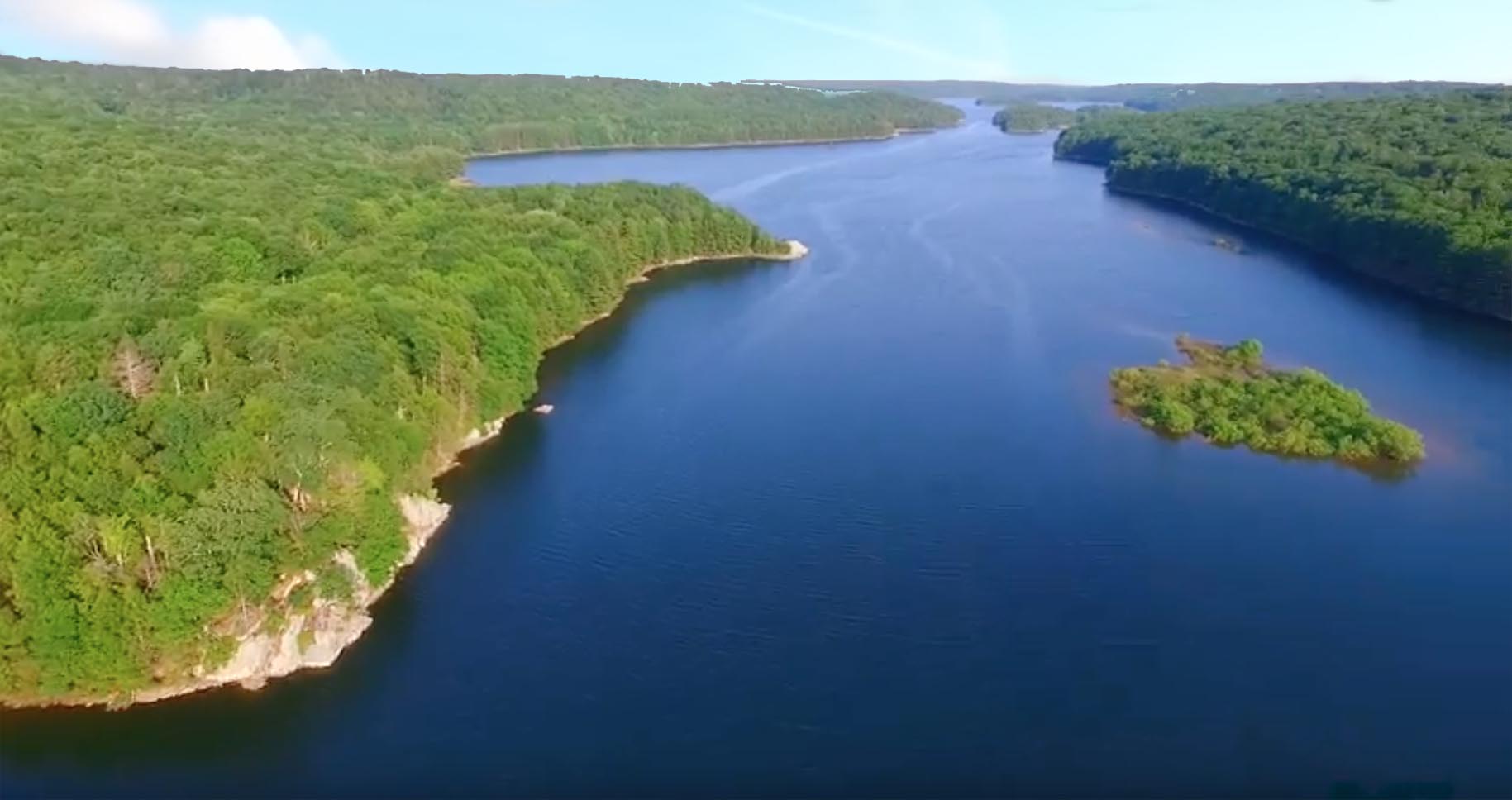
Stamford, with 130,000 residents, is diverse, largely urban, a business center known for its traffic and proximity to Manhattan. Easton, with a homogeneous population of 7,500, is largely rural. It has one traffic light and not a single commercial zone. But they have a vital connection – most of Easton is on watershed land owned by Aquarion, and its reservoirs are a big source of Stamford’s water. Now Eastoners are in court battling a development of 66 houses and duplex units that has been approved for a tract of land between two significant reservoirs – Aspetuck and Easton Lake.
Aspetuck — along with the Saugatuck Reservoir, which runs along the Easton border into Weston and Redding; and Hemlocks Reservoir, which crosses into Fairfield – are part of a system that supplies 5 million of the 11 million gallons of water Stamford uses each day. The feed can go as high as 7 million gallons a day in normal times, said Bruce Silverstone, vice president of corporate communications for Aquarion, the area’s water utility.
But, because of a drought plaguing the region, Aquarion in November installed a temporary above-ground pipe and the Easton area began feeding Stamford all 11 million gallons. The water flows far beyond Stamford. The Easton-area system is a source for all of southern Fairfield County. “We are hoping that all towns in the county that get water from us would help us,” said Bill Kupinse, a former Easton first selectman and an attorney on the board of Citizens for Easton, a group he said has “been around for about 40 years trying to protect Easton from one developer or another.”
Affordable housing
The Easton Planning and Zoning Commission approved the housing project in March, after months of debate, tacking on “a whole bunch of conditions,” Kupinse said. “But the citizens of Easton don’t think the conditions are sufficient to protect the watershed.” Continue reading

Easton Conservation/Inland Wetlands Agency never received for review an application from Saddle Ridge for the 2016 development proposal

January 3, 2017 letter to P&Z from Conservation Chair and Resident Dori Wollen:
“This is a follow up to my letter to you dated November 18, 2016 regarding the latest Saddle Ridge development proposal. As noted before, the Conservation/Inland Wetlands Agency (“Conservation”) has yet to render an opinion due to the lack of receiving a formal application from the developers. The developers continue to claim that there is no new wetland impact and therefore the 2014 Conservation permit remains valid. However, until we know the extent of the regulated activities we cannot determine their impact. This issue was last discussed at our meeting on November 15, 2016 which prompted my letter referred to above. Continue reading

Significant concerns were raised in testimony by soil scientist expert

Excerpt from letter from Environmental Planning Services, (CSE’s intervenor expert) regarding the Saddle Ridge development application to Easton P&Z:
“The Planning and Zoning Commission cannot rely on the wetland permit as the Conservation Commission’s report or approval for several reasons. The plans do not meet the conditions of the Conservation Commission 2014 permit, which included modifications to the design of the drainage and stormwater treatment systems, as well as permanent restrictions on impervious cover, restrictions on construction timing, and individual review of the site plan for each home lot that includes an upland review area. It appears that individual reviews will be required on 44 of the 49 lots. The current application and plans also do not address the condition calling for a third party engineering review of the construction, as required by the wetland permit.  The Conservation Commission conditions are also consistent with my recommendations with respect to establishment and permanent funding of a long term maintenance mechanism for the stormwater management system.  If it is true that the applicant has maintained an active appeal of the permit, these concerns are especially significant.” 

Easton Health Department did not recommend approval of Saddle Ridge

Easton Health Department did not recommend approval of the Saddle Ridge application; many concerns noted in their letter to Planning and Zoning, including:
“…The proposed subdivision is calling for 1 acre lots with both a septic system and an onsite private well. We are concerned that the water quantity may not be available to serve such a dense development. There are property owners in the vicinity of the development who have chosen to drill a second well due to insufficient water quantity. The developer must provide an answer to the question – will there be adequate water quantity to serve this development? Because of the density of the development it will be difficult, if not impossible, to drill additional wells on the individual lots and meet all code requirements.”

Easton P&Z approves high density affordable housing development on sensitive watershed property draining into two major reservoirs

Our zoning commission has approved the application for an intensive affordable housing development proposed by Saddle Ridge, “with multiple conditions.” No matter the conditions, the intensive development of this property in the watershed between two reservoirs which service over 400,000 residents in Fairfield County should not have been approved. Aquarian Water Company opposed the application, as well as various town officials and governmental entities. In a prior application by Saddle Ridge our courts previously recognized that the need to protect the watershed outweighed the need for an intensive affordable housing development by Saddle Ridge. Continue reading

Easton P&Z Approves High Density Housing Development in the Watershed


We understand how a bad law has put Easton and dozens of other communities across the state in an untenable position. Either they bow to the dictates of an irremediably flawed affordable housing statute or suffer the consequences in court. What we don’t quite understand is why our own zoning commission has ignored an extenuating factor in this instance: Intensive housing developments such as this put the watershed at risk and ultimately public health as well. All manner of so-called “safety nets” or “conditions” can’t begin to redress this blunt fact nor prevent similar developments in the future. Courts have already ruled that Easton does indeed have a unique mandate in protecting a vital public resource, yet our own town sees otherwise. We’re disappointed, but also optimistic that the best outcome – for Easton and the hundreds of thousands of Fairfield county residents who depend on this resource – will ultimately prevail.

Image

Hartford wants to hear from you! There is still time to comment.

reservoirYou may have heard that conflict continues over an application before Planning & Zoning which would break zoning and imperil the watershed. We’re sorry to say, you’ve heard right. An earlier application had been rejected by P&Z, while Judge Berger of the Hartford District Superior Court had sided with concerns that intensive development on the watershed would present a deleterious impact on the public water supply. The developer subsequently appealed, and was denied.
As always, the challenge before P&Z remains so-called affordable housing under CGS 8-30g. However, in an effort to redress the concerns over this law – often used by developers to force towns to break their zoning – our State Senator, Tony Hwang and Rep. Brenda Kupchick are soliciting comments. Those could help shape potential amendments that would protect the watershed and public health. The deadline for input for the public hearing was February 16 but you still can send in your comments, so please contact your representatives listed below.
If this application were to prevail, others would follow. A domino effect thus established, the threat to public health would be far-reaching, and irreversible.
“Irreversible” is a big word. Fortunately, “if” is not. It’s not too late to make certain this deeply flawed law doesn’t subvert our future, our health, and our mandate to protect this precious resource.
Citizens for Easton has a basic position:
If any portion of a proposed affordable housing development is on land that drains into a public water supply reservoir, a substantial public interest must be established which supersedes 8-30g.
Intensive development on the watershed puts at risk the drinking water of over 340,000 residents in towns across Fairfield County, including Bridgeport, which depend on Easton’s reservoirs for safe, clean, potable water.
Please send your comments to : HSGtestimony@cga.ct.gov with subject line: “Improve 8-30g” with copies to Tony.Hwang@cga.ct.gov, Brenda.Kupchick@cga.ct.gov and adam.dunsby@housegop.ct.gov

Residents can weigh in on controversial 8-30g law

As reported by the Fairfield Sun on February 6, 2017
Housing Committee Co-Chair Sen. Tony Hwang and Ranking Member Rep. Brenda Kupchick today issued the following statement: Area residents can now tell state lawmakers what they think of the controversial affordable housing state law known as 8-30g. The CT General Statute section 8-30g law:

  • Has been used by developers to bypass local control and zoning regulations and environmental concerns
  • Has caused controversial housing decisions throughout Connecticut after costly and inflammatory court litigation.
  • Has the potential to forever alter the unique and historical character of neighborhood architecture and communities.

This year, we have an opportunity to:

  • Take a close look at this law and how it can be improved and adapted to meet changing community needs.
  • Receive input from local zoning officials, community leaders and residents from impacted neighborhoods.
  • Come to a solution which provides towns with much-needed control and flexibility while also achieving the goal of increasing our stock of workforce housing.

The Connecticut General Assembly’s Housing Committee will hold a public hearing on the 8-30g law on Thursday, Feb. 16 at the Legislative Office Building in Hartford. You can email your comments about the law today to the Housing Committee at HSGtestimony@cga.ct.gov. The comment may be as brief as you like. Include your name and town in the email.
Put “Improve 8-30g” in the email’s subject line
Copy us on the email at Tony.Hwang@cga.ct.gov and Brenda.Kupchick@cga.ct.gov
For more information on the law, visit cga.ct.gov/2017/rpt/pdf/2017-R-0013.pdf. For more information, call 800-842-1421 (Co-Chair Sen. Hwang) and 800-842-1423 (Ranking Member Rep. Kupchick).

Lack of need, expert objections call for denial of Saddle Ridge plan

Easton Courier: Letter to the Editory, January 24, 2017

To the Editor:
To legally reject an application for an affordable housing development such as Easton Crossing, the probable cause of harm to the health and safety of the populace has to outweigh the need for affordable housing in Easton.
Apparently there are 15 affordable housing units in Easton, which have had an approximate 50% vacancy rate for the last several years. If this is so, there doesn’t appear to be a demand for the existing affordable housing in Easton, much less a need for even more affordable housing.
Also, the fact that P&Z has received written objections to this development based on protecting the public water supply and aquifers from such credible organizations and authorities as the Aquarion Water Company, the Connecticut Fund For the Environment, the Easton Health Department, the Easton land use director, the Connecticut Metropolitan Council of Governments, and one of the region’s preeminent soil, biological and wetlands scientists, Michael S. Klein, certainly seems to prove that this development application does pose a considerable threat to the health and safety of the populace.
In summary, a demonstrable lack of demand for affordable housing combined with the distinguished and detailed opposition of the above-named organizations and experts would call for denial of this application by the Easton Planning & Zoning Commission.
Grant Monsarrat
Easton, CT

NEXT (AND MAYBE LAST) SADDLE RIDGE PUBLIC HEARING

Adequate water supplies of high quality are
necessary both for community use and local
ecosystems . . .

Citizens for Easton feel the development proposed by Saddle Ridge would be a danger to our drinking water.

But…we can’t do it alone

Attendance is critical: Thursday, Dec 22 7:00 PM HKMS


Citizens for Easton relies on donations

Click HERE to donate via PayPal and add instruction “CSE” or send your checks made out to Citizens for Easton with Coalition to Save Easton (CSE) in the memo, and mail to Citizens for Easton, PO Box 151, Easton, CT 06612. CSE is a division of CFE which is a registered 501 (c) (3) tax-exempt organization. With your support we can continue to hire experts to help in our efforts to protect and preserve our water supply.

Please contact

Rob Maquat, Planning & Zoning Chairman via email at manania@eastonct.gov and Dori Wollen, Conservation Commission Chairperson at kring@eastonct.gov, or send a letter to them at 225 Center Road, Easton, CT 06612.

Thank you  for your passion, support and dedication to something that affects every one of us – the environment and the future of our town. Citizens for Easton/CSE will continue to advocate to uphold Easton’s zoning and to protect the safety of the public drinking water supply.