Image

Spread the Word to Protect Public Lands Vote Yes on Question #2 on November 6th!

Bill Kupinse addresses the Board of Selectmen and Sacred Heart University


LETTER TO P&Z ON THE DRAFT PLAN OF CONSERVATION & DEVELOPMENT

Dear Planning and Zoning Commission:

I am supplementing my prior comments to you on the draft Plan of Conservation and Development because while I previously emphasized the reasons why you should not include some of your concepts in the POCD, in so doing, to some extent I neglected to address the reasons which you give for including your concepts.

Your concepts for the village district and commercial zone and clustered development (as well as congregate care, age-restricted housing and planned retirement communities which I had not previously commented on) are proposals for radical changes in zoning in Easton. We should all be able to agree that if radical changes are to be implemented, there should be good reasons for doing so. Let’s take a brief look at your reasons.

P&Z has stated that the village district concept may help lower taxes in Easton. Incorrect. It would take 185 Easton Village stores to make a 10% reduction in taxes.

P&Z has stated that the village district concept will improve the grand list and house sales which are lagging behind other towns. Incorrect. The latest statistics for the first half of the year as published by one of the members of the planning and zoning commission shows that Easton leads all of the neighboring towns in the percentage increase in number of homes sold for the first half of the year. In that same report, although the median selling price for the same period has decreased by 14%, this is pretty much on par with all of the neighboring towns with the exception of Redding which increased by 9.2% and Wilton which increased by 3.9%. We would suggest that Easton sells better than all of the surrounding towns and that might well be due to its bucolic nature which in the future will become more and more important as other towns continue their commercial development.

P&Z has stated that the village district will provide a place for town people to congregate. Incorrect. There are already many places of congregation in town including the already existent grandfathered businesses within the proposed village district.

P&Z has stated that the village district will provide more control to P&Z. Incorrect. The planning and zoning commission already has ample control over the grandfathered businesses in the proposed village district. Moreover, the town does not now enforce the regulations which it has, evidenced by the apparent violation existing currently within the proposed village district and other obvious violations in town such as the logging operation on Route 59.

The planning and zoning commission also argues that it would be desirable to encourage millennials to move to Easton. While some would argue against that, in any event creating a village district is not going to do it. What might be of help would be to increase the amenities available in town, such as a year-round swimming pool for residents, but the cost of such improvements is probably prohibitive. What might be of help, and importantly not significantly costly, would be to give every new resident a one-year free membership in the Easton Community Center. To do so would encourage use of a presently existing gathering place in Easton and perhaps would encourage use and support of the Community Center after the year’s free membership.

I have not previously addressed the POCD concepts of “congregate care or similar facilities to provide housing alternatives,” “age-restricted housing/planned retirement communities,” or “multifamily dwellings.” All of these concepts, while not fully developed in the POCD, would be radical changes in our zoning and, as the commission itself points out, difficult to achieve given the need for protection of the water supply to over 400,000 Fairfield County residents which Easton provides.

The Board of Selectmen has received and is considering the POCD. I urge the members of the Board of Selectmen and indeed all of the citizens of Easton to oppose the radical changes proposed in the plan of conservation and development. Many do not recognize that the planning and zoning commission is the only entity which will vote on the POCD. The citizens of Easton do not have a vote in this matter. The commission is, however, holding a public hearing on October 1 at which comments will be received. The commission previously held a public hearing in June with about 130 people in attendance. The strong majority of those in attendance was to oppose radical changes in our zoning as suggested in the draft POCD. Nevertheless, the commission ignored the sentiment of the meeting and made virtually no changes in the draft POCD. Hopefully, if a large number of residents oppose the radical changes at the meeting on October 1, the planning and zoning commission will heed the sentiment of the town’s people and remove the proposed radical changes and keep Easton to jewel of Fairfield County.


Bill Kupinse

South Park-Sacred Heart Proposal to Lease for Baseball Field- Thursday August 16th, 7:30 PM at Senior Center

Sacred Heart University will be presenting a proposal to lease a portion of the South Park Property for the purpose of a baseball field. The public is invited to comment and ask questions. This is agenda item #1 of the regular BOS meeting.
Item #3 is public comment.
We urge you to attend.
Gallery

2018 CITIZENS FOR EASTON FARM TOUR HORSING AROUND AT GOLD RUSH FARM

This gallery contains 2 photos.

2018 Citizens For Easton Farm Tour Was Fun for All

Despite a forecast of heavy rains and flash floods in Fairfield County, many brave souls came out to the 2018 Easton Farm Tour. It was wet, but the rain was mild and the spirits were high!

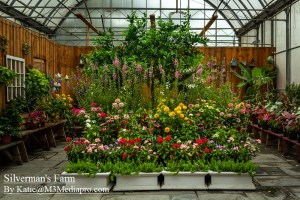
We are thankful for the farmers who opened their doors (and greenhouses) to embrace the community.

Additionally, we thank the The Easton Garden ClubHistorical Society of Easton, CT, the Master Composters, the Falcon Cheerleaders, and everyone who contributed to make this event a success.

Special thanks for the  unique and fun prizes generously donated by:

Aspetuck Apple Barn                     J & L Orchids                   Old Bluebird Garage

Sherwood Farm                             Sport Hill Farm LLC        Easton Village Store

Easton Community Center          Shaggy Coos Farm            Robert Danuszar

Gilbertie’s Herb Farm                   Sabia Tree Farm               Silverman’s Farm

JCL Farm                                         Gold Rush Farm

Photos by Katie Henry, Copyright of M3Media Productions

THANKS FOR COMING TO THE FARM TOUR!

It was a successful day despite the weather.

A huge thank you to everyone who participated.

Stay tuned for the wrap up report…

Planning & Zoning Special Meeting Agenda for Thursday, July 12 at 7 p.m.

P&Z will review with Glenn Chalder comments received as a result of the public information meeting held June 20, 2018.

If you wish for your opionion to be considered, it must be received prior to this meeting. Please email P&Z at: manania@eastonct.gov

planning_and_zoning_commission_special_meeting_agenda_07-12-2018

Easton Board of Selectman Meeting Tonight, 6/21: South Park on Agenda

The South Park Avenue property is on the agenda for Easton Board of Selectman meeting tonight, June 21, at 7:30 at the Easton Town Hall Conference Room. At the beginning of the meeting at 7:30 is the public comment period. Preserving as protected open space the pastoral 29.6 acres was advocated by Citizens for Easton in 2016 for many reasons, including its sensitive location, abutting the section of the Mill River that is one of only nine Class A Wild Trout Streams left in the state. Many noted conservation organizations also supported its preservation. Please try to attend this meeting.


Agricultural endeavors are aiming to put Easton on the map

Sal Gilbertie is owner of Gilbertie Herb Farm, an Easton greenhouse that produces both herbs and nutritional greens. Gilbertie’s operation has shifted its focus repeatedly during the more than half a century he has been a grower. — Robert Sample photo

With 50 mostly small- and family-run farms within its town limits, few Connecticut towns have preserved farmland as assiduously as Easton. And without sacrificing its status as an out-of-the-way oasis amid the sprawl of suburbia, Easton now wants to put itself on the map.

Of note, the town is now actively seeking a designation as Connecticut’s Christmas Tree Capital, with attendant signage on the Merritt Parkway. Recently, Citizens for Easton — a nonprofit group that works to preserve the town’s small town characteristics — invited residents, gardening enthusiasts, budding growers and other interested observers to an event called Meet Easton’s Farmers.

The well-attended meeting provided an overview of agriculture in Easton, the challenges faced by small farmers today and the town’s potential as an agri-tourism hub.

The town’s preservation measures helped retain large tracts of open space and largely rural ambiance. Silverman’s Farm evolved from a cider mill and truck farm founded in the early 1920s into a popular destination for day-trippers from throughout the tri-state region.

“In the 1980s a lot of farms — including us — became pick-your-own places,” said Irv Silverman, the youngest son of founders Ben and Rose Silverman,who now runs the family farm.“Little kids who visit have never seen fruit growing on a tree, so visits to farms like ours are educational for today’s youngsters.”

At the much newer Shaggy Coos Farm nearby, Tim and Bernadette Brady raise beef cattle, pigs, and turkeys, and board horses. Two years ago, the couple purchased two Holstein dairy cows and began producing natural milk.

“Natural milk tastes nothing like what you buy in a supermarket,” Brady noted. To demonstrate, he brought a container to give out samples of the farm’s chocolate milk. The Bradys spent days taste-testing and fine tuning the perfect combination of milk and cocoa.

The biggest hurdle the Bradys face is the lack of a USDA-certified slaughterhouse in Connecticut. This means producers such as the Bradys must bring livestock for slaughter to New York or Massachusetts.

Niche

Sal Gilbertie, owner of Gilbertie Herb Garden in Easton, urged those interested in agriculture to choose a product “niche.” His is a third-generation greenhouse that began as a producer of cut flowers, later diversified into potted plants and arrived at its current specialty — herbs — at a time when that market was in its infancy.

“We were the only game in town when it came to herbs,” said Gilbertie. More recently, Gilbertie has diversified yet again. This time, he is specializing in micro- , petite-, and baby-greens, capitalizing on their newfound popularity and reputation for packing a nutritional punch.

“The smaller the green, the more nutritious and flavorful it is,” said Gilbertie.

Howland Blackiston raises a rather unusual crop: bees. He has been a lifelong bee enthusiast but pursued beekeeping only after moving to Easton in the 1970s. He’s the author of both “Beekeeping for Dummies” and “Building Hives for Dummies,” and created a website in 1998 devoted to backyard beekeeping.

Bees play a vital role in the pollination of food crops and have suffered of late from a well-publicized syndrome known as colony collapse disorder (CCD). “We don’t know for sure what causes CCD but some very smart people are working on it,” Blackiston noted.

Possible culprits include viruses, parasites, mites and certain pesticides. “I urge everyone to take a very good look at what you put on your plants,” Blackiston said. In particular, he urged gardeners to eschew a type of widely available pesticide known as neonicotinoids. They are toxic to bees and are banned in some European countries.

The gathering also heard from Lori Cochran-Dougall, a board member of the Fairfield County Farm Bureau. Cochran-Dougall began a program that teaches women in veterans’ rehabilitation how to cook with the assistance of award-winning farm-to-table chefs. She pointed out that cooking skills help people to be both more self-sufficient and to eat healthier diets.

Some practical advice came from Carol Hamilton, a retired teacher who is a state-certified master gardener and member of the Easton Garden Club. In recent months, the club and Hamilton’s fellow master gardeners have fielded plenty of questions about the effects of winter and spring storms on plants and trees.

“Whenever you have a question, talk to a master gardener – it’s a free resource,” Hamilton noted. “Or better yet, take the course.”